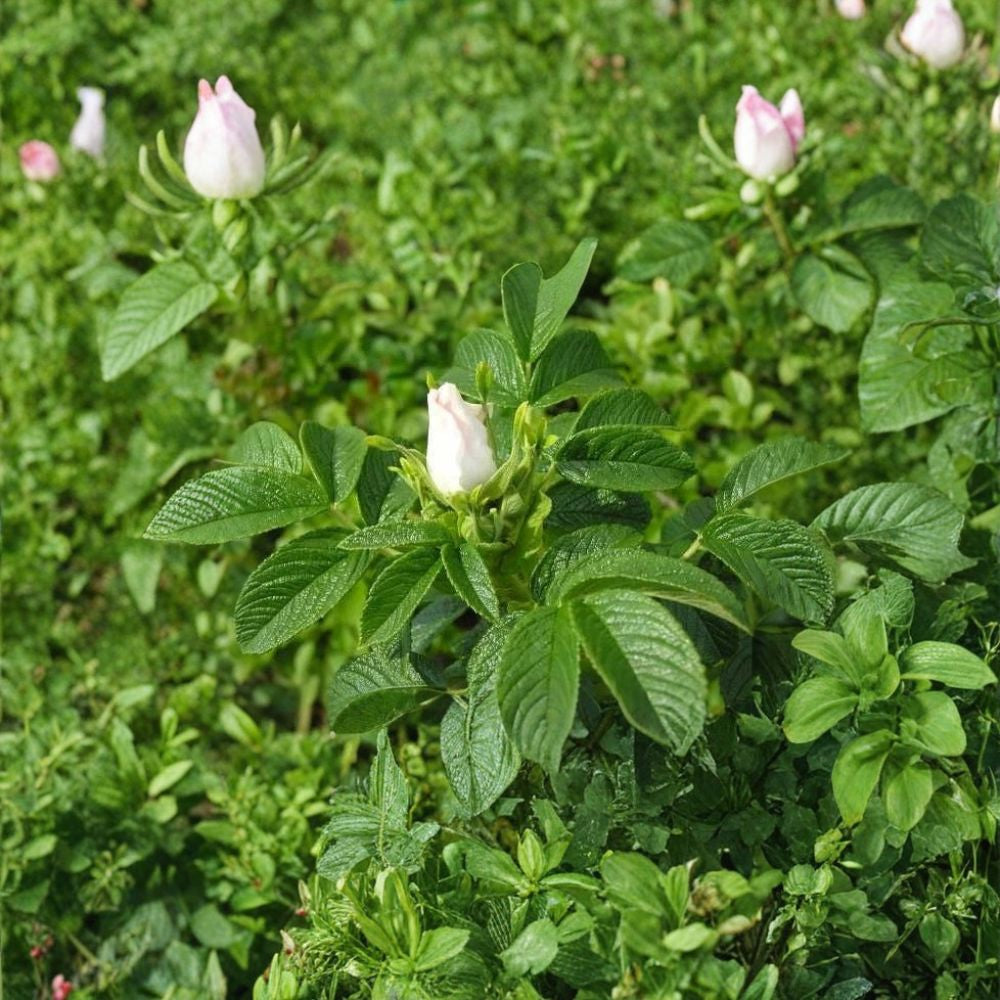
White Rugosa Rose – Rosa rugosa albiflora 400 Seeds | Fragrant Hardy Flowering Shrub Fast Growing | Edible Rose Hips | Cold & Salt Tolerant
White Rugosa Rose – Rosa rugosa albiflora 400 Seeds | Fragrant Hardy Flowering Shrub Fast Growing | Edible Rose Hips | Cold & Salt Tolerant
Couldn't load pickup availability
Create stunning hedges, borders, or naturalized plantings with this 400-seed bulk pack of White Rugosa Rose (Rosa rugosa albiflora). Exceptionally hardy and easy to grow, this rugged shrub produces abundant, pure white, highly fragrant flowers from late spring through late summer.
White Rugosa Rose forms a dense, upright, rounded shrub growing 4–6 feet tall and 3–5 feet wide. Its distinctive crinkled, glossy dark green foliage turns vibrant shades of yellow, orange, and red in fall. After flowering, large orange to red rose hips develop and persist through winter. These vitamin C-rich hips can be used for teas, jams, and jellies while also providing food for birds and wildlife.
Highly adaptable, this shrub tolerates cold climates, heat, drought, wind, and salt spray—making it ideal for coastal gardens, cottage landscapes, wildlife habitats, and durable hedging.
You will receive:
✔️ 400 White Rugosa Rose seeds
✔️ Clearly labeled bulk seed packet
✔️ Detailed germination instructions
✔️ Untreated, non-GMO seeds
✔️ Secure packaging for safe delivery
🌼 Growing Information
Common Name: White Rugosa Rose
Botanical Name: Rosa rugosa albiflora
Plant Type: Fragrant flowering deciduous shrub
Growth Stage: Seed
Sun Requirements: Full sun to part shade
Soil: Adaptable; prefers average, well-drained soil
Watering: Medium; water regularly during establishment
Mature Height: 4–6 feet
Spread: 3–5 feet
Growth Rate: Fast
USDA Zones: 2–8
Drought Tolerance: Medium to high once established
💡 Care Tip: Soak seeds for 24 hours, then cold stratify for 90–120 days at 40°F in a moist medium. Sow 1/4 inch deep. Prune in late winter or early spring while dormant to maintain shape. Remove spent blooms to encourage repeat flowering.
Share