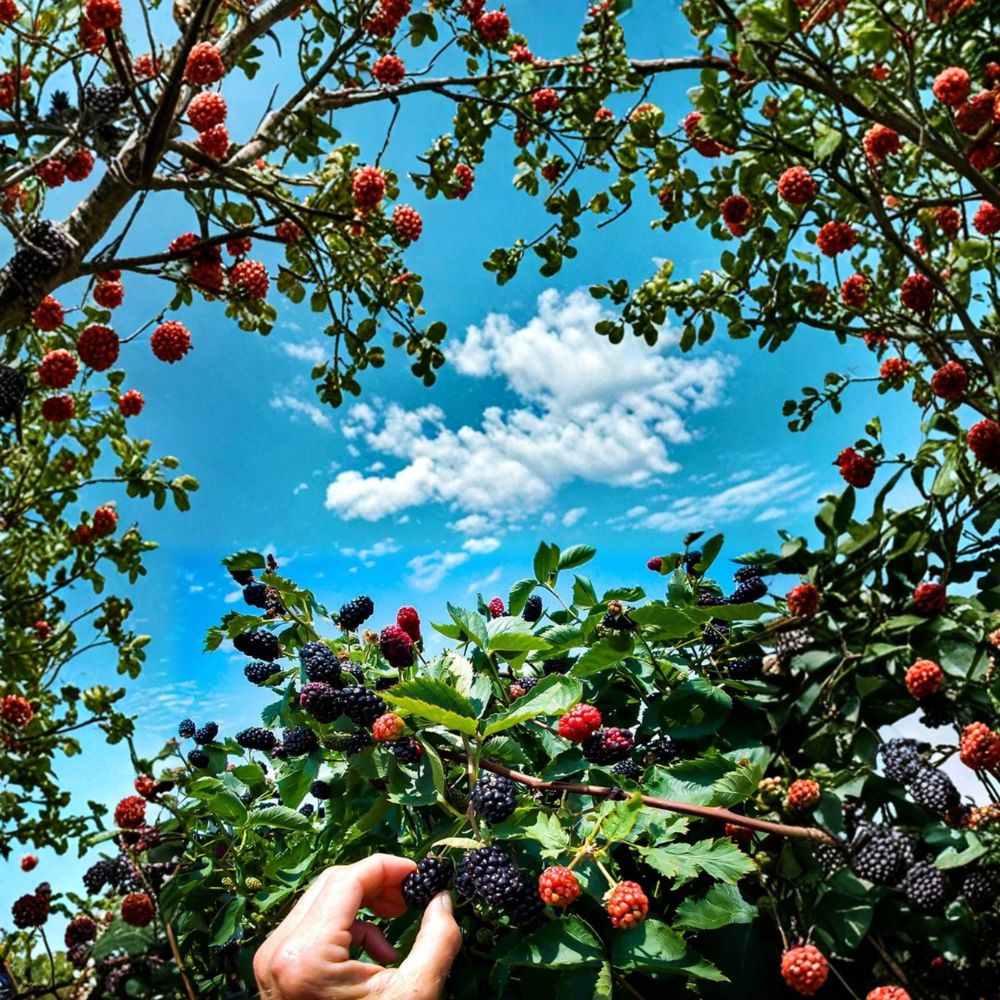
Triple Crown Thornless Blackberry Plants – Set of 4 Live Starters | 4–6 Inches Tall | Rooted Plants No Pot | Sweet Garden Berry Bush
Triple Crown Thornless Blackberry Plants – Set of 4 Live Starters | 4–6 Inches Tall | Rooted Plants No Pot | Sweet Garden Berry Bush
Couldn't load pickup availability
Grow delicious, homegrown berries with this Set of 4 Triple Crown Thornless Blackberry plants, each measuring approximately 4–6 inches tall and shipped rooted without pots for easy planting. This vigorous variety is known for producing large, sweet blackberries with excellent flavor and reliable harvests.
The Triple Crown blackberry is a highly productive, semi-erect plant that thrives in sunny garden locations. It produces large, firm berries that ripen in early August, making it a favorite among gardeners who want flavorful fruit for fresh eating, baking, jams, and preserves.
With its thornless canes and disease resistance, this variety is easy to grow and maintain. It performs well in backyard gardens, raised beds, containers, and berry rows, rewarding growers with abundant harvests within 1–2 years of planting.
You will receive:
✔️ 4 live Triple Crown thornless blackberry plants
✔️ Height: approximately 4–6 inches tall
✔️ Rooted plants (no pot)
✔️ Healthy starter plants ready for planting
✔️ Carefully packaged for safe delivery
🌼 Growing Information
Common Name: Triple Crown Thornless Blackberry
Botanical Name: Rubus fruticosus ‘Triple Crown’
Plant Type: Perennial fruiting bramble
Growth Stage: Rooted starter plant
Sun Requirements: Full sun to partial shade (6–8 hours preferred)
Soil: Well-drained loamy soil (pH 6.0–6.8)
Watering: Moderate; keep soil moist but not soggy
Spacing: About 5 feet between plants
Support: Staking or trellis recommended for best growth
Mature Height: 5–8 feet
Growth Rate: Fast growing once established
Harvest Season: Early August
USDA Zones: 5–9
Container Friendly: Yes, with large containers and support
💡 Care Tip:
Tip-prune new canes in summer to 4–5 feet to encourage branching and higher fruit production. After harvest, remove old fruiting canes to promote strong new growth for the next season.
Share