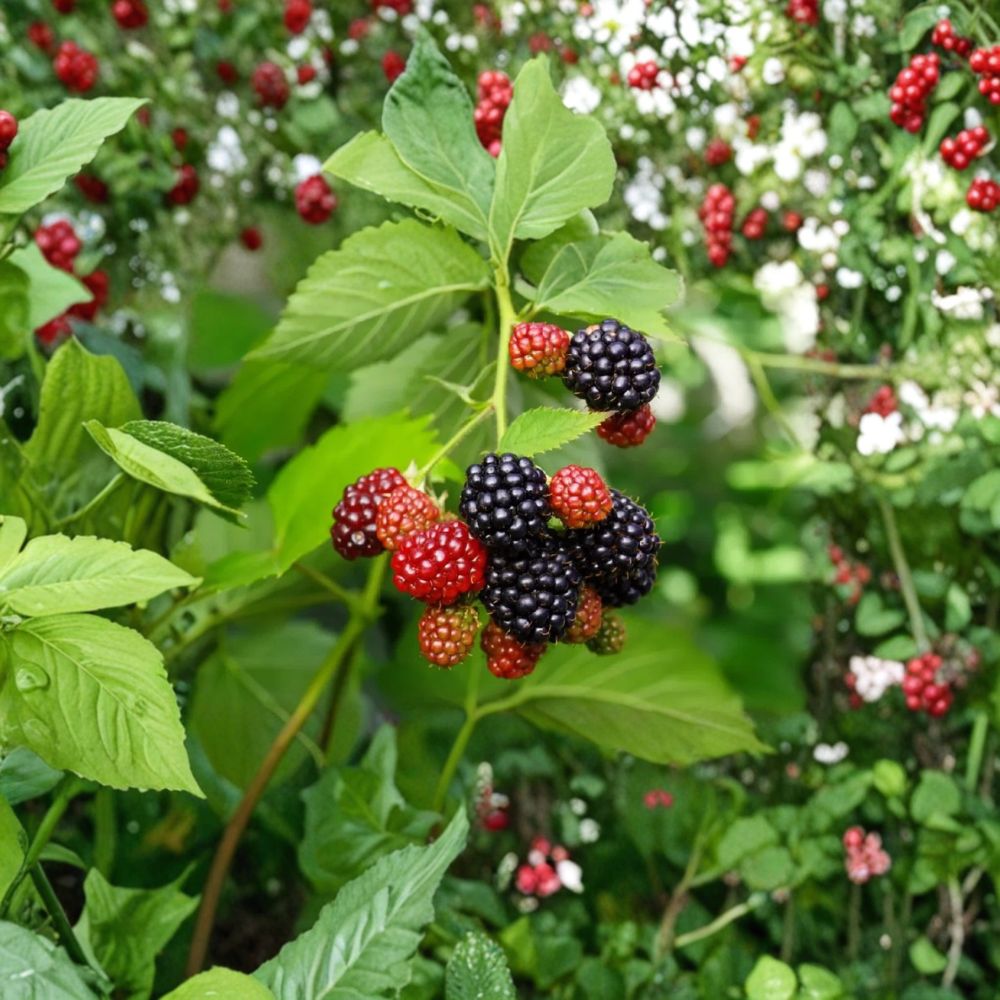
Triple Crown Thornless Blackberry Plants – Rubus fruticosus Live Starters | Set of 2 | 4–6 Inches Tall | Large Sweet Berries | Rooted Plants No Pot
Triple Crown Thornless Blackberry Plants – Rubus fruticosus Live Starters | Set of 2 | 4–6 Inches Tall | Large Sweet Berries | Rooted Plants No Pot
Couldn't load pickup availability
Start your berry garden with this set of 2 Triple Crown Thornless Blackberry plants (Rubus fruticosus ‘Triple Crown’). This highly popular variety is known for producing large, juicy blackberries with excellent sweetness and flavor, making it one of the best choices for backyard gardens.
Triple Crown blackberry plants grow on thornless semi-erect canes, making them easier to maintain and harvest compared to traditional thorny varieties. The plants are vigorous, productive, and beginner-friendly, producing abundant berries that are perfect for fresh eating, baking, jams, and desserts.
This variety typically ripens around early August and can provide several weeks of harvest once established. The plants arrive rooted and ready to plant (no pot included) and are suitable for garden beds, raised beds, berry rows, or containers with trellis support.
You will receive healthy plants similar in size and condition to those shown in the listing photos.
You will receive:
✔️ 2 live Triple Crown thornless blackberry plants
✔️ Height: approximately 4–6 inches tall
✔️ Healthy rooted starter plants
✔️ Bare root plants (no pot included)
✔️ Secure packaging for safe arrival
🌼 Growing Information
Common Name: Triple Crown Thornless Blackberry
Botanical Name: Rubus fruticosus ‘Triple Crown’
Plant Type: Deciduous fruiting bramble
Growth Stage: Rooted starter plant
Sun Requirements: Full sun to partial shade
Soil: Well-draining loamy soil (pH 6.0–6.8 preferred)
Watering: Moderate; keep soil evenly moist
Mature Height: 4–8 feet with support
Growth Rate: Fast growing
USDA Zones: 5–9
Container Friendly: Yes, with trellis support
💡 Care Tip:
Provide a trellis or support system to guide the semi-erect canes and improve air circulation. After harvest, prune canes that have fruited and tip-prune growing canes to encourage more berry-producing branches.
Share