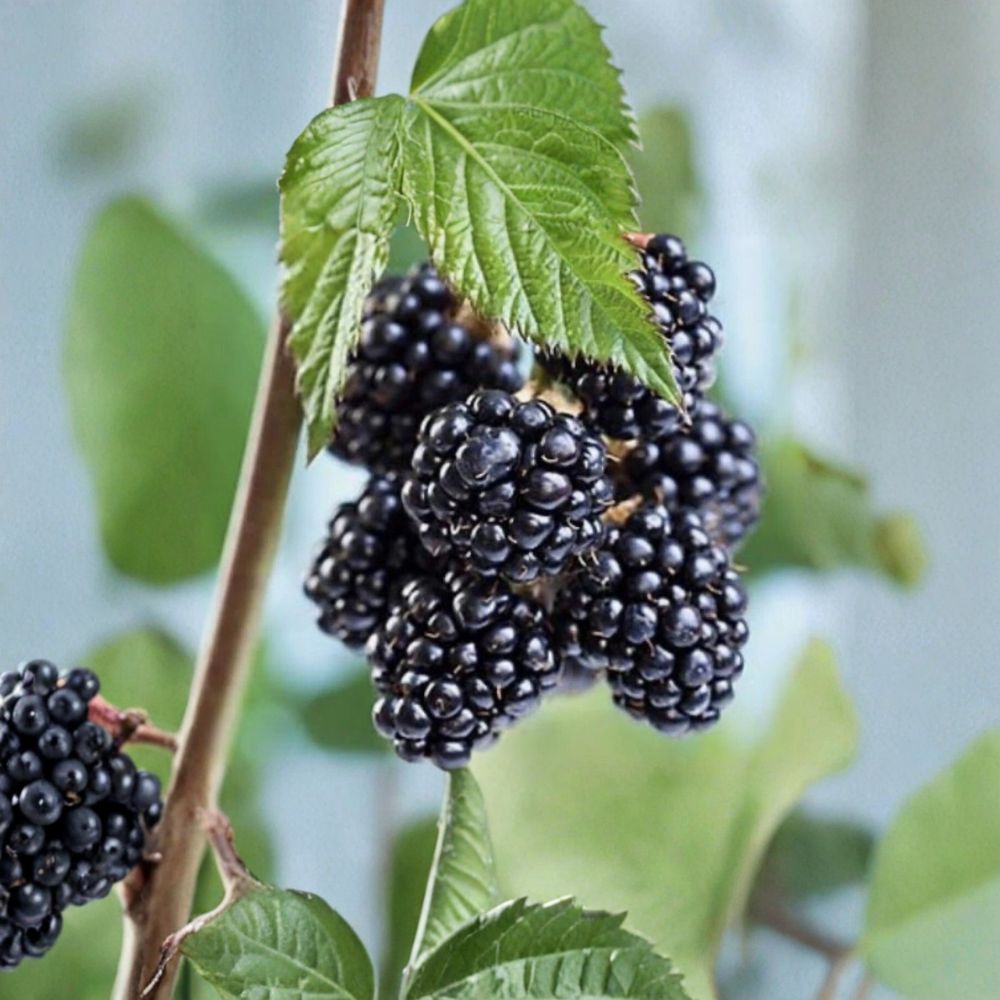
Sweetie Pie Thornless Blackberry – Rubus Live Plants | 4–10 Inches Tall | 3 Pack Tissue Cultured Berry Bush | Non-GMO Organic Fruit Plant | Heat Tolerant
Sweetie Pie Thornless Blackberry – Rubus Live Plants | 4–10 Inches Tall | 3 Pack Tissue Cultured Berry Bush | Non-GMO Organic Fruit Plant | Heat Tolerant
Couldn't load pickup availability
Grow sweet, delicious berries at home with this 3 pack of “Sweetie Pie” Thornless Blackberry plants, a popular variety prized for its sweet flavor, vigorous growth, and easy harvesting. These young starter plants are 4–10 inches tall, healthy, and grown from tissue culture for strong, disease-free plants.
The Sweetie Pie blackberry is a thornless, semi-erect variety, making it easier to manage and harvest compared to traditional thorny blackberry bushes. It produces abundant sweet berries that are perfect for fresh eating, desserts, smoothies, jams, and baking.
This variety also performs well in warmer climates thanks to its tolerance to hot temperatures, making it a great choice for many backyard gardens and edible landscapes. Berries develop on second-year canes, rewarding gardeners with reliable harvests each season.
Plants are non-GMO and grown organically without pesticides, making them a great option for gardeners who prefer natural growing practices.
Plants will arrive bare (not potted) and carefully packaged for safe delivery.
You will receive:
✔️ 3 live Sweetie Pie blackberry plants
✔️ Height: approximately 4–10 inches
✔️ Thornless berry variety
✔️ Tissue cultured starter plants
✔️ Secure packaging for safe arrival
🌼 Growing Information
Common Name: Sweetie Pie Blackberry
Botanical Name: Rubus fruticosus ‘Sweetie Pie’
Plant Type: Perennial fruiting bush
Growth Stage: Starter plants
Sun Requirements: Full sun (6–8 hours daily preferred)
Soil: Well-draining fertile soil
Watering: Moderate; keep soil evenly moist
Mature Height: 4–6 feet with support
Growth Rate: Fast growing
USDA Zones: 6–10
Container Friendly: Yes
💡 Care Tip: Since this variety produces fruit on second-year canes, allow new growth to develop the first season and prune older canes after fruiting to encourage healthy future harvests.
Share