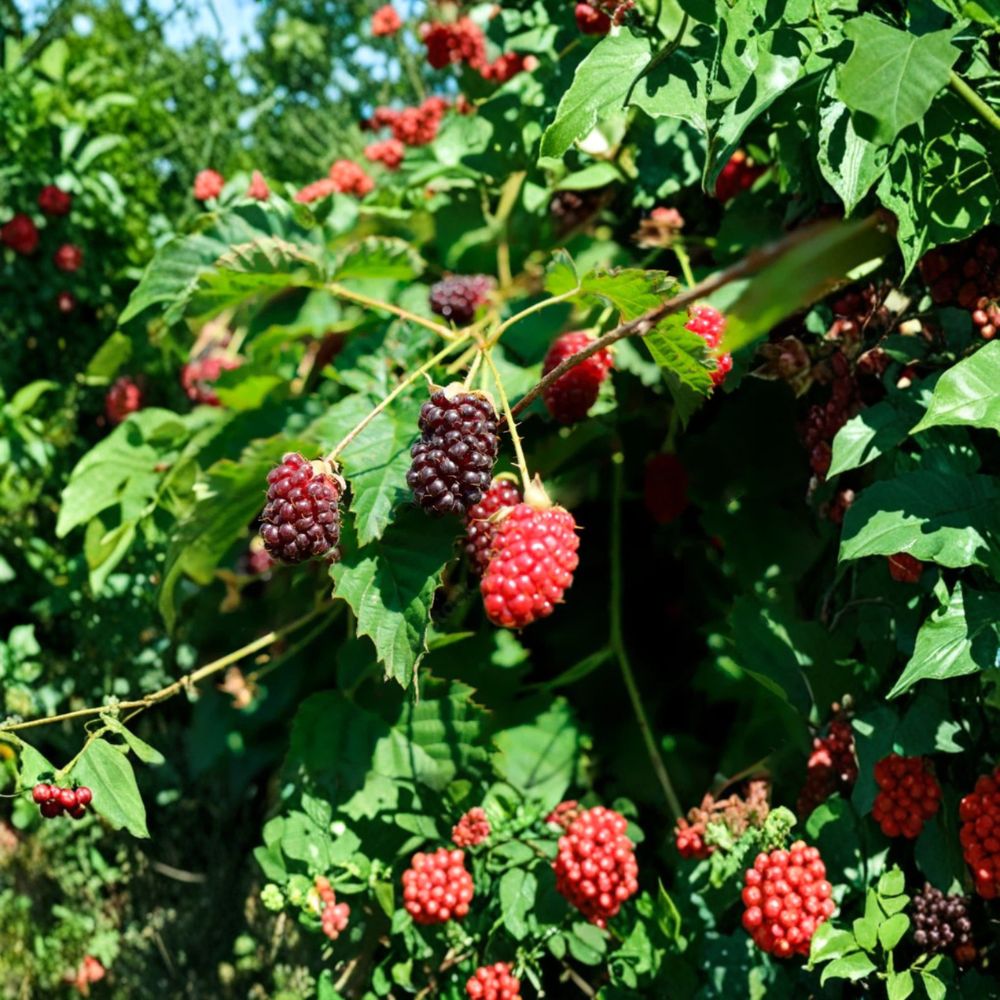
Sweet Boysenberry Plants – Set of 2 Live Berry Plants | 4–6 Inches Tall | Soil Root Balls No Pot | Garden Fruit Starter
Sweet Boysenberry Plants – Set of 2 Live Berry Plants | 4–6 Inches Tall | Soil Root Balls No Pot | Garden Fruit Starter
Couldn't load pickup availability
Grow delicious summer berries with this set of 2 live Sweet Boysenberry starter plants, each approximately 4–6 inches tall and shipped with healthy soil root balls (no pots) for easy transplanting. These plants are carefully packed to keep roots moist and protected during shipping.
Sweet Boysenberries produce large, juicy deep purple berries with a rich sweet flavor and mild tartness. This famous hybrid fruit—created from raspberry, blackberry, and loganberry—is highly valued for its flavor and versatility in the kitchen.
Boysenberry plants are vigorous growers and produce abundant harvests during the summer season. They are perfect for backyard gardens, berry patches, raised beds, or large containers, rewarding gardeners with flavorful fruit ideal for fresh eating, pies, jams, syrups, smoothies, and desserts.
You will receive:
✔️ 2 live Sweet Boysenberry plants
✔️ Height: approximately 4–6 inches tall
✔️ Healthy soil root balls (no pot)
✔️ Strong rooted starter plants ready for planting
✔️ Carefully packaged for safe delivery
🌼 Growing Information
Common Name: Sweet Boysenberry
Botanical Name: Rubus ursinus × idaeus (Boysenberry hybrid)
Plant Type: Perennial fruiting vine
Growth Stage: Starter plant
Sun Requirements: Full sun (6–8 hours daily preferred)
Soil: Well-draining fertile soil
Watering: Moderate; water regularly during dry periods
Spacing: 5–6 feet between plants
Support: Trellis recommended for trailing vines
Mature Height: 5–8 feet with support
Growth Rate: Moderate to fast once established
Harvest Season: Summer
USDA Zones: 5–9
Container Friendly: Yes, with large containers and support
💡 Care Tip:
Plant in a sunny location and provide a trellis or fence for vine support. After harvest, prune old fruiting canes to encourage healthy new growth and stronger production next season.
Share