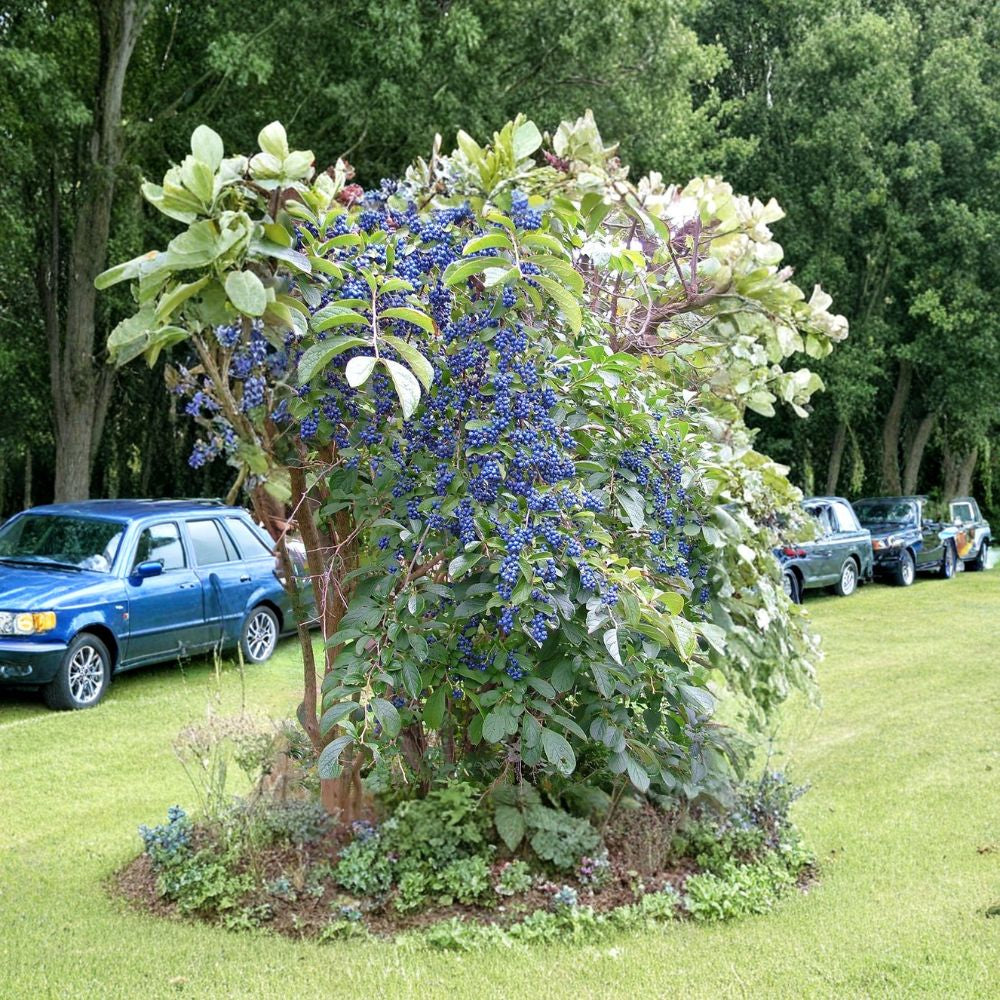
Sapphire Berry – Symplocos paniculata Shrub Seeds | 30 Seeds | Showy Turquoise Fruit | Hardy Ornamental Shrub
Sapphire Berry – Symplocos paniculata Shrub Seeds | 30 Seeds | Showy Turquoise Fruit | Hardy Ornamental Shrub
Couldn't load pickup availability
Grow one of the most uniquely beautiful shrubs available with Sapphire Berry (Symplocos paniculata). Known for its extraordinary bright turquoise to sapphire-blue berries, this deciduous large shrub or small tree creates a stunning display in fall unlike any other ornamental plant. When mature and covered in vivid blue fruit, it becomes a true garden showpiece.
Native to China, Japan, and the Himalayas, Sapphire Berry typically grows 10–20 feet tall with a spreading, multi-stemmed habit. In spring to early summer, fragrant creamy white flowers bloom in delicate panicles on last year’s wood. By fall, these give way to striking 1/3-inch jewel-toned drupes that attract birds and provide valuable wildlife food.
Hardy and adaptable, this shrub tolerates cold, heat, and wind. It is easy to grow, generally pest-free, and performs best in well-drained soil in full sun. An excellent choice for shrub borders, bird gardens, screens, or as a small ornamental tree.
You will receive:
✔️ 30 Sapphire Berry seeds
✔️ Botanical name: Symplocos paniculata
✔️ Fresh, untreated seeds
✔️ Labeled seed packet with sowing instructions
✔️ Secure packaging for safe delivery
🌼 Growing Information
Common Name: Sapphire Berry
Botanical Name: Symplocos paniculata
Plant Type: Deciduous large shrub or small tree
Growth Stage: Seed
Sun Requirements: Full sun
Soil: Average, medium moisture, well-drained soil
Watering: Medium
Mature Height: 10–20 feet
Spread: 10–25 feet
Growth Rate: Slow
USDA Zones: 4–8
Container Friendly: No
💡 Care Tip:
Soak seeds for 24 hours, then provide warm stratification for 90–120 days followed by cold stratification for 60–90 days at about 40°F in a moist medium. Sow seeds 1/8 inch deep. Plant in groups of three or more to encourage cross-pollination and better fruit production.
Share