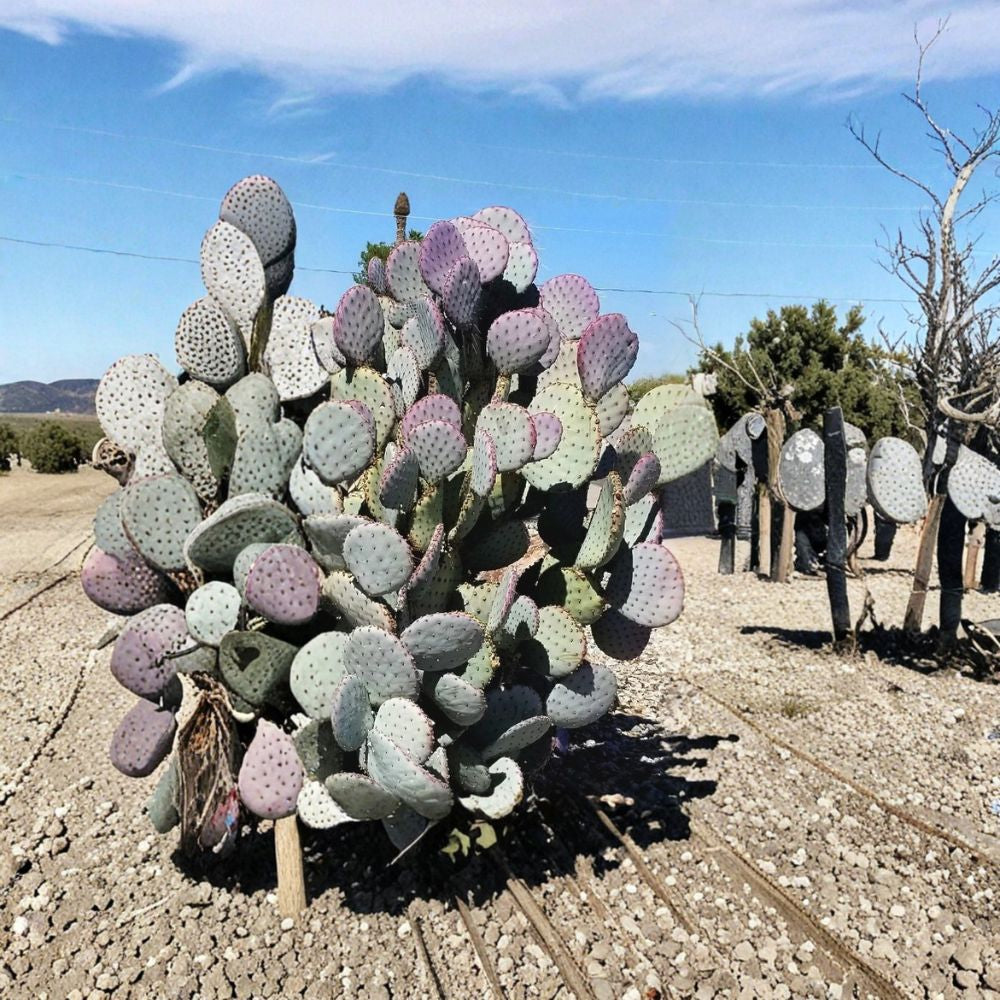
Santa Rita Purple Prickly Pear – Opuntia violacea 3 Cut Pads | 5–6 Inches Each | Arizona Grown Cold Hardy Purple Cactus | Drought Tolerant | Striking Landscape Plant
Santa Rita Purple Prickly Pear – Opuntia violacea 3 Cut Pads | 5–6 Inches Each | Arizona Grown Cold Hardy Purple Cactus | Drought Tolerant | Striking Landscape Plant
Couldn't load pickup availability
Add bold desert color to your garden with 3 Santa Rita Purple Prickly Pear cactus pads (5–6 inches each). This stunning Arizona native is famous for its dramatic color transformation—pads turn brilliant red-purple during cold or drought stress and shift back to blue-green in warmer conditions.
Extremely hardy once established, Santa Rita Prickly Pear tolerates winter frost and even snow. It makes an eye-catching focal point in xeriscapes, rock gardens, and Southwestern-style landscapes.
Grown in our family greenhouse in Arizona with no chemical pesticides or fertilizers.
You will receive pads similar in size and condition to those shown in the listing photos. Pads may arrive green or purple depending on seasonal stress conditions.
⚠️ Handling Notice:
This cactus has fine glochids (tiny hair-like spines) that can attach to skin and fabric. Always open outdoors and handle using thick gloves and tools. Avoid direct contact.
You will receive:
✔️ 3 Santa Rita Purple Prickly Pear pads
✔️ Approximately 5–6 inches each
✔️ Fresh cut pads ready for rooting
✔️ Naturally grown (no chemical pesticides)
✔️ Secure packaging for safe delivery
🌼 Growing Information
Common Name: Santa Rita Purple Prickly Pear
Botanical Name: Opuntia violacea
Plant Type: Perennial cactus
Growth Stage: Pad cutting
Sun Requirements: Full sun (6–8+ hours daily)
Soil: Sandy, well-draining cactus soil
Watering: Low; drought tolerant once established
Mature Height: 4–6 feet
Spread: 6–10 feet
Growth Rate: Moderate
USDA Zones: 7–11
Container Friendly: Yes (with excellent drainage)
💡 Care Tip: Allow the cut end to callous for several days before planting. Place upright in well-draining soil and water lightly after planting. Avoid overwatering during establishment.
Share