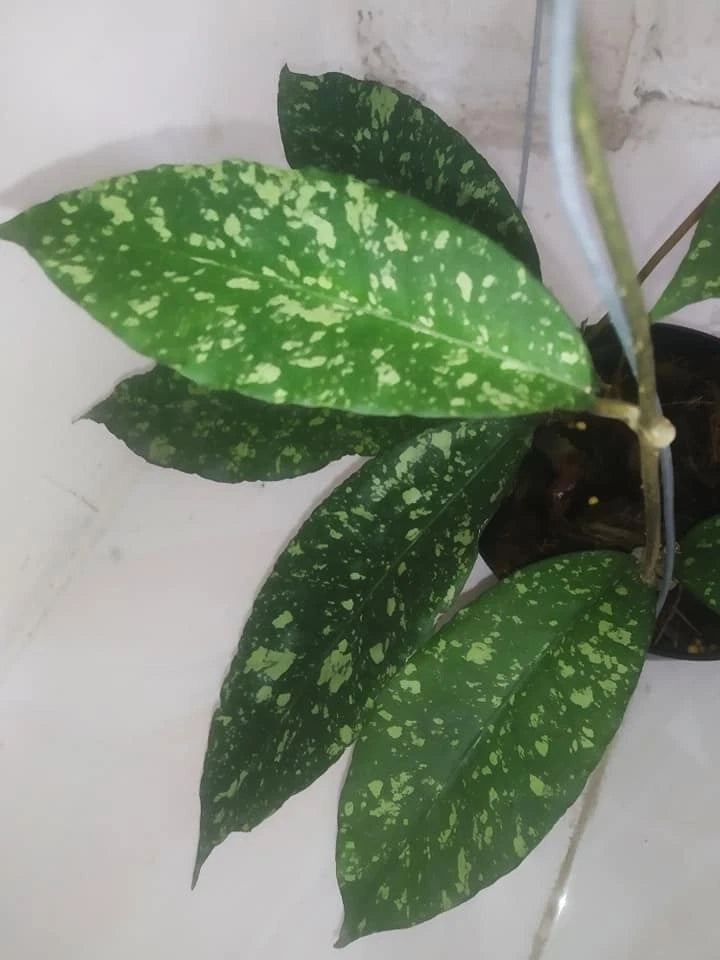
Rare 'Aceh Honey Dew' Hoya (Hoya sp. Aceh 'Honey Dew') – Elite Tropical Epiphyte Specimen (Collectors Quality)
Rare 'Aceh Honey Dew' Hoya (Hoya sp. Aceh 'Honey Dew') – Elite Tropical Epiphyte Specimen (Collectors Quality)
Couldn't load pickup availability
Acquire a premier, collectors-grade specimen of the distinguished Hoya sp. Aceh 'Honey Dew'. Sourced directly from elite Indonesian botanical stock, this selection is a marvel of tropical epiphyte evolution, prized by advanced collectors for its uniquely succulent, rounded foliage and the ethereal, nectar-rich fragrance of its eventual blooms. This is not a commercial-grade cutting; it is a meticulously curated specimen for the refined conservatory, designed to command presence through its luscious leaf texture and superior genetic vigor.
The Aceh 'Honey Dew' cultivar is celebrated for its thick, chartreuse-to-emerald waxy leaves that possess a distinctively smooth, almost translucent finish—giving them the appearance of being perpetually bathed in dew. This cultivar exhibits a more compact, refined growth habit compared to other Aceh variants, making it a masterpiece of horticultural symmetry. When provided with stable environmental conditions, this plant demonstrates exceptional resilience and a steady, rhythmic growth cycle. It is an ideal candidate for elite, high-humidity displays where its unique leaf form can be observed up close.
Our specimen is professionally established, displaying robust root-zone health and acclimatized for immediate transition into your high-end collection. Each plant is selected for consistent leaf coloration and form, ensuring you receive a premium specimen that epitomizes the rarity and botanical luxury of the Aceh province’s endemic flora.
You will receive:
-
✔️ One (1) premium, established 'Aceh Honey Dew' Hoya specimen
-
✔️ Healthy, high-vigor rooting system in professional-grade epiphytic media
-
✔️ Foliage with exceptional, succulent-like gloss and genetic uniformity
-
✔️ Shipped in moisture-secure, temperature-controlled, shock-resistant botanical packaging
-
✔️ Exclusive Hoya Care & Epiphytic Management Protocol included
🌳 Cultivation & Care Information
-
Botanical Name: Hoya sp. Aceh 'Honey Dew'
-
Common Name: Aceh Honey Dew Wax Plant
-
Plant Type: Tropical, epiphytic, vining perennial
-
Sun Requirements: Bright, Filtered Light (Essential: Requires high-intensity, indirect light to maintain the lush, succulent appearance of the foliage. Harsh, direct sunlight will cause leaf burn, while low light will diminish the plant's structural integrity and growth speed).
-
Soil / Medium: Must be grown in a specialized, ultra-airy epiphytic substrate (e.g., a high-porosity mix of orchid bark, coco chips, perlite, and premium long-fiber sphagnum moss). Superior aeration is non-negotiable; roots must have immediate access to oxygen to prevent rot.
-
Watering: Employ a "controlled-dry" protocol. Allow the substrate to approach dryness between waterings; this specimen thrives when the roots are kept in a state of rapid, active hydration followed by a period of aeration. Never allow the root zone to remain sodden.
-
Humidity: Thrives in high ambient humidity (65%–85%). Consistent moisture in the air is vital to replicate its natural epiphytic canopy environment and maintain the "dew-like" leaf luster.
-
Temperature: Ideal range: 22°C–29°C. This specimen is highly sensitive to temperature fluctuations; protect absolutely from cold drafts and temperatures below 16°C to avoid physiological dormancy or cellular damage.
💡 Pro Growing Tip: Hoya sp. Aceh 'Honey Dew' possesses a specific physiological requirement for high-potassium nutrition during its peak growing cycle to support its dense, succulent-like leaves. Supplement with a urea-free, balanced orchid fertilizer applied at 1/4 strength during every third watering. To maintain the signature "Honey Dew" gloss, ensure your plant is kept in a clean, dust-free environment with consistent, gentle air movement—this prevents pathogen buildup and ensures the plant's respiration rate remains at peak efficiency. When the plant reaches maturity, consistent, slightly elevated night temperatures are the key trigger for initiating its legendary, nectar-rich flowering cycle!
Share