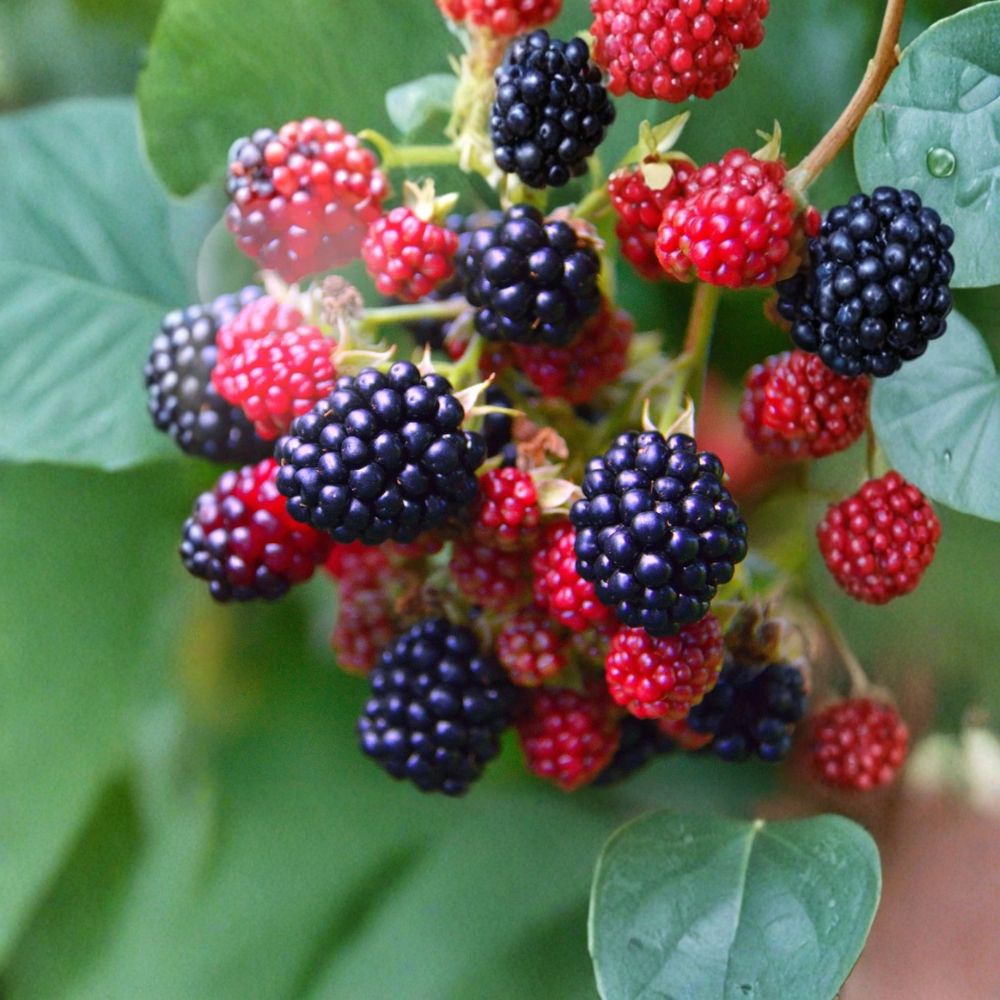
Prime-Ark Freedom Blackberry – Rubus fruticosus ‘Prime-Ark® Freedom’ Live Plants | 4–6 Inches Tall | Set of 2 Soil-Wrapped Roots | Thornless Dual Harvest Berry Bush
Prime-Ark Freedom Blackberry – Rubus fruticosus ‘Prime-Ark® Freedom’ Live Plants | 4–6 Inches Tall | Set of 2 Soil-Wrapped Roots | Thornless Dual Harvest Berry Bush
Couldn't load pickup availability
Enjoy extended berry harvests with this set of 2 Prime-Ark® Freedom Thornless Blackberry plants, a revolutionary variety known for producing fruit on both first-year and second-year canes. These starter plants arrive approximately 4–6 inches tall with soil-wrapped roots (no pot) and are ready to transplant into your garden or container.
Prime-Ark Freedom is prized for its large, sweet blackberries and extended fruiting season, often producing berries in early summer and again in fall in suitable climates. The thornless canes make harvesting easy, while the plant’s upright growth habit allows it to grow well in backyard gardens, raised beds, or small orchards.
This variety is self-fertile, productive, and relatively low maintenance, making it ideal for gardeners who want reliable berry harvests with minimal effort. The sweet flavor makes these berries perfect for fresh snacking, baking, smoothies, jams, and preserves.
You will receive plants similar in size and condition to the ones shown in the listing photos.
You will receive:
✔️ 2 live Prime-Ark Freedom blackberry plants
✔️ Height: approximately 4–6 inches
✔️ Soil-wrapped rooted plants (no pot)
✔️ Thornless berry variety
✔️ Secure packaging for safe arrival
🌼 Growing Information
Common Name: Prime-Ark Freedom Blackberry
Botanical Name: Rubus fruticosus ‘Prime-Ark® Freedom’
Plant Type: Perennial fruiting bush
Growth Stage: Starter plants
Sun Requirements: Full sun (6+ hours daily preferred)
Soil: Well-draining fertile soil
Watering: Moderate; keep soil evenly moist during fruiting
Mature Height: 4–6 feet
Growth Rate: Fast growing
USDA Zones: 6–9
Container Friendly: Yes
💡 Care Tip: After harvest, prune older canes during winter to encourage vigorous new growth and improve next season’s fruit production. Occasional staking may help support heavy berry loads.
Share