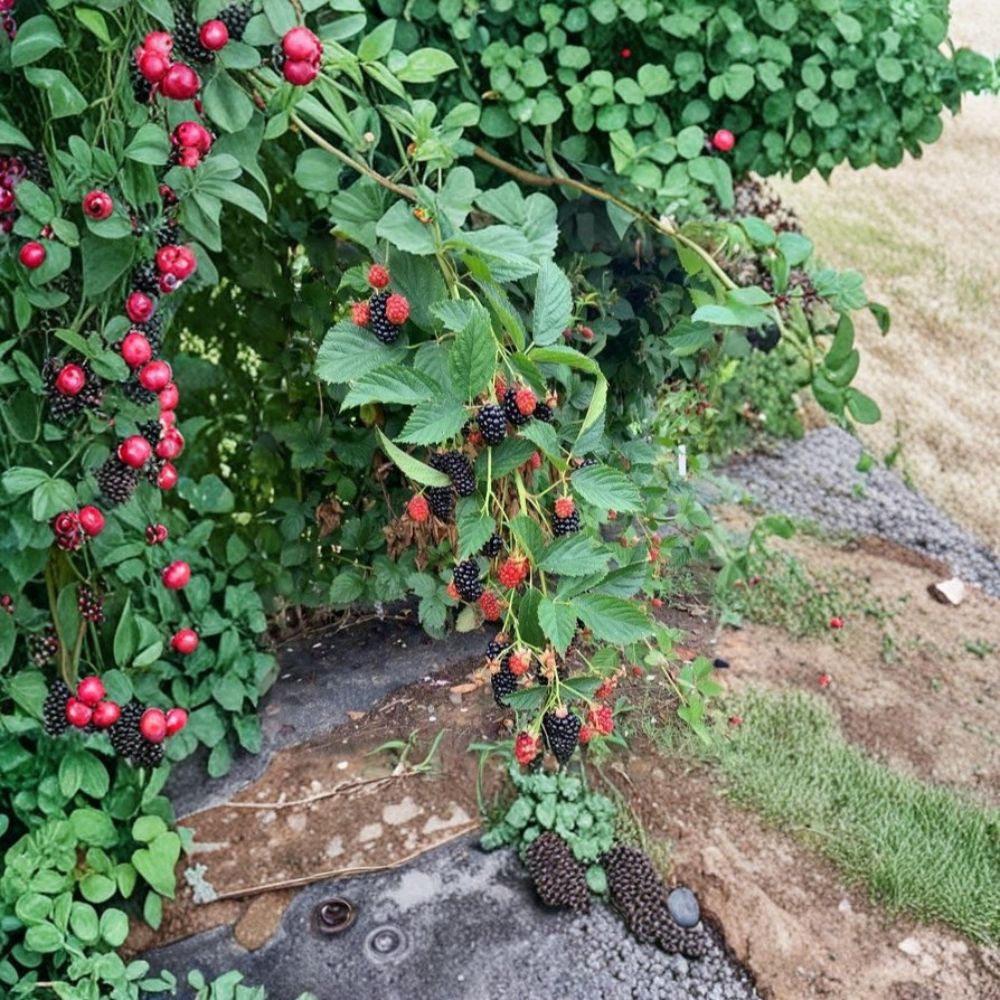
Prime-Ark 45 Thornless Blackberry Plants – Set of 2 Live Berry Bushes | 1–2 Year Old Plants | Primocane Fruiting Variety | Garden Ready
Prime-Ark 45 Thornless Blackberry Plants – Set of 2 Live Berry Bushes | 1–2 Year Old Plants | Primocane Fruiting Variety | Garden Ready
Couldn't load pickup availability
Grow delicious berries with this set of 2 Prime-Ark 45 Thornless Blackberry plants, well-rooted 1–2 year old plants that are pruned and ready for planting. Prime-Ark 45 is a popular blackberry variety known for its large berries, excellent flavor, and high yields.
This unique primocane-fruiting blackberry can produce fruit on first-year canes, allowing gardeners to enjoy earlier harvests compared to many traditional varieties. The berries ripen around June, offering sweet, flavorful fruit packed with nutrients and perfect for fresh eating, baking, or making jams and preserves.
With thornless canes and vigorous growth, Prime-Ark 45 is easy to maintain and harvest. It performs well in backyard gardens, berry rows, and edible landscapes, providing productive harvests season after season.
You will receive:
✔️ 2 live Prime-Ark 45 thornless blackberry plants
✔️ 1–2 year old well-rooted plants
✔️ Plants pruned and ready for planting
✔️ Healthy starter plants with strong roots
✔️ Planting instructions included
🌼 Growing Information
Common Name: Prime-Ark 45 Thornless Blackberry
Botanical Name: Rubus fruticosus ‘Prime-Ark 45’
Plant Type: Perennial fruiting bramble
Growth Stage: 1–2 year established plant
Sun Requirements: Full sun (6–8 hours daily preferred)
Soil: Well-draining fertile soil
Watering: Moderate; keep soil consistently moist during fruiting
Spacing: 3–4 feet between plants
Support: Trellis recommended for best fruit production
Mature Height: 4–6 feet
Growth Rate: Fast growing once established
Harvest Season: Early summer (June) and potentially later season on primocanes
USDA Zones: 6–9
Container Friendly: Yes, with large containers and support
💡 Care Tip:
Because this is a primocane-fruiting variety, you can prune plants in late winter to encourage strong new canes that will produce fruit during the same growing season.
Share