Opuntia humifusa – Winter Hardy Prickly Pear Cactus 10 Unrooted Pads | Yellow Flowers | Extreme Cold Tolerant Hardy Outdoor Cactus | Spreading Perennial | Low Maintenance Plant
Opuntia humifusa – Winter Hardy Prickly Pear Cactus 10 Unrooted Pads | Yellow Flowers | Extreme Cold Tolerant Hardy Outdoor Cactus | Spreading Perennial | Low Maintenance Plant
Couldn't load pickup availability
Add a truly tough and beautiful native cactus to your landscape with Opuntia humifusa, one of the most winter-hardy prickly pear varieties available in the United States.
These are actual cactus pads (NOT seeds). You will receive 10 healthy, unrooted pads that root extremely easily and establish quickly. Within one growing season, you can have multiple lush cactus plants spreading and thriving.
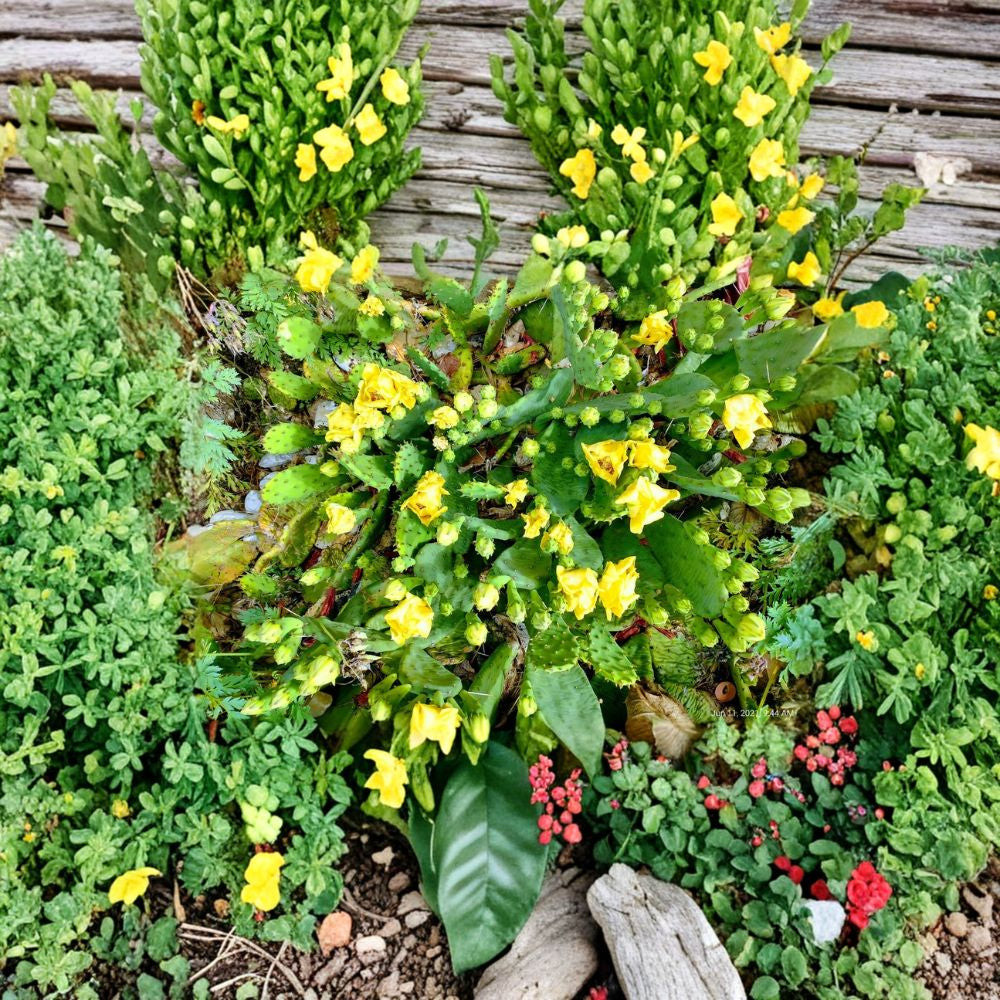
This hardy prickly pear produces large, vibrant yellow flowers in late spring to early summer, followed by red fruit. In colder climates, the pads naturally shrivel and turn darker red during winter (even at temperatures as low as -15°F) as a survival mechanism, then plump back up in spring.
Photos shown are actual seasonal photos. Dark-colored pads are winter dormancy color.
You will receive:
✔️ 10 healthy unrooted cactus pads
✔️ Winter hardy Opuntia humifusa
✔️ Easy-to-root cuttings
✔️ Yellow flowering perennial cactus
✔️ Securely packaged for safe delivery
🌼 Growing Information
Common Name: Winter Hardy Prickly Pear
Botanical Name: Opuntia humifusa
Plant Type: Herbaceous perennial cactus
Growth Stage: Unrooted pad cuttings
Sun Requirements: Full sun (direct sunlight preferred)
Soil: Very well-draining, sandy, rocky, or poor soil
Watering: Very low; drought tolerant once established
Mature Height: Up to 10 inches
Spread: 18–36 inches
Growth Rate: Fast during warm season
USDA Zones: 4–9 (extremely cold hardy)
Container Friendly: Yes, with excellent drainage
💡 Care Tip: Plant pads in the driest, poorest soil available with full sun exposure. Add sand, gravel, or rocks for drainage. Do not overwater. Pads may shrivel and darken after the first hard freeze—this is normal dormancy behavior and they will recover in spring.
Share