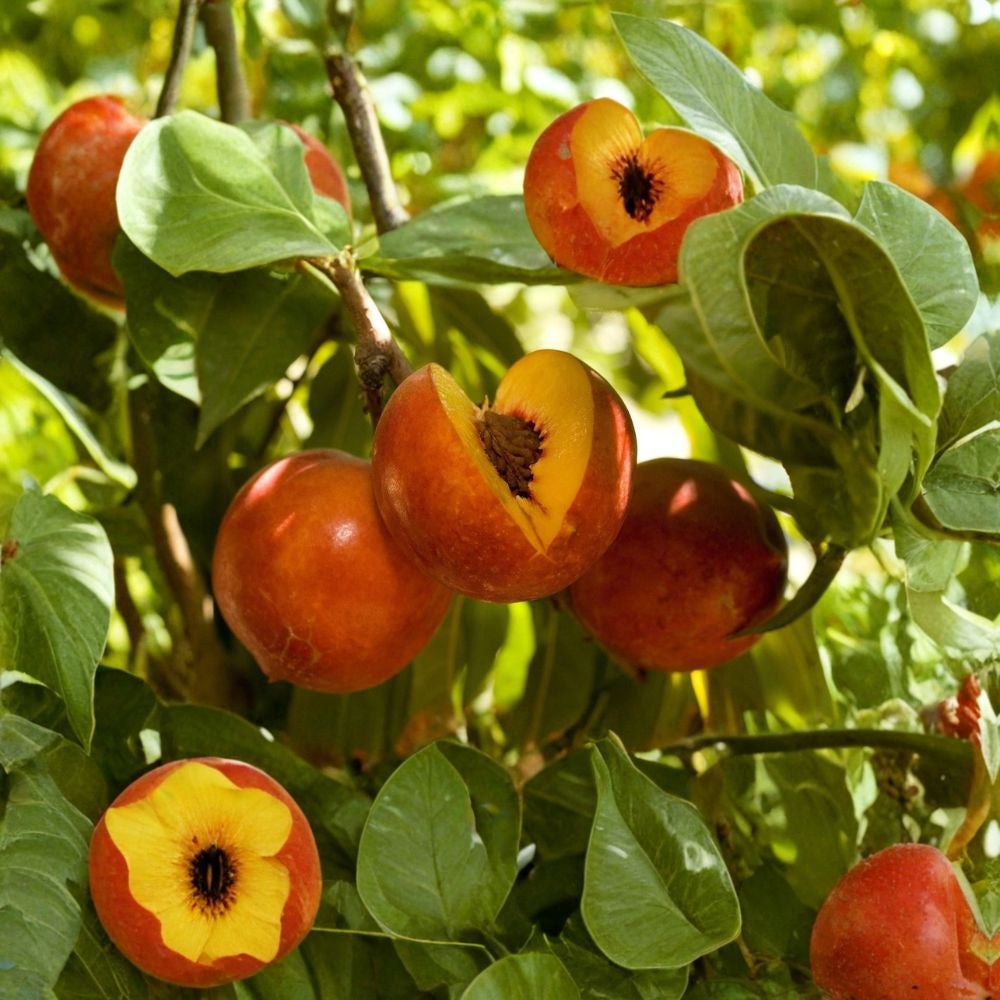
Nectarine ‘Double Delight’ – Prunus persica var. nucipersica Live Tree | 3 Feet Tall | Ships in 3 Gallon Pot Low Chill Variety | Sweet Freestone Fruit | Stunning Double Pink Blossoms
Nectarine ‘Double Delight’ – Prunus persica var. nucipersica Live Tree | 3 Feet Tall | Ships in 3 Gallon Pot Low Chill Variety | Sweet Freestone Fruit | Stunning Double Pink Blossoms
Couldn't load pickup availability
Enjoy one of the best-tasting nectarines available with this 3-foot tall ‘Double Delight’ Nectarine tree, shipped in a 3-gallon pot with a strong, healthy root system and ready to plant.
‘Double Delight’ is known for its exceptional flavor, consistently rated among the best yellow nectarines in taste tests. The dark red-skinned freestone fruit is sweet, rich, and intensely flavorful. In spring, the tree produces magnificent double pink blossoms, making it both ornamental and productive.
This heavy-bearing, self-fruitful variety is an excellent choice for backyard orchards and home gardeners looking for premium fruit quality.
You will receive a plant similar in size and health to the one shown in the listing photos.
You will receive:
✔️ 1 live ‘Double Delight’ nectarine tree
✔️ Height: approximately 3 feet tall
✔️ Shipped in 3-gallon pot
✔️ Healthy, well-rooted plant
✔️ Secure packaging for safe arrival
🌼 Growing Information
Common Name: Double Delight Nectarine
Botanical Name: Prunus persica var. nucipersica
Plant Type: Deciduous fruit tree
Growth Stage: Established young tree
Sun Requirements: Full sun (6–8+ hours daily preferred)
Soil: Well-draining sandy or loamy soil
Watering: Moderate; keep soil evenly moist during growing season
Mature Height: 12–15 feet (can be pruned smaller)
Growth Rate: Moderate to fast
USDA Zones: 7–9
Chill Hours: Approximately 300 hours
Pollination: Self-fruitful
Harvest Season: Early to mid-summer (early–mid July in warm climates)
Container Friendly: Yes (large container with pruning)
💡 Care Tip: Thin developing fruit early in the season to improve fruit size and maintain tree health. Prune annually during dormancy to encourage strong structure and heavy production.
Share