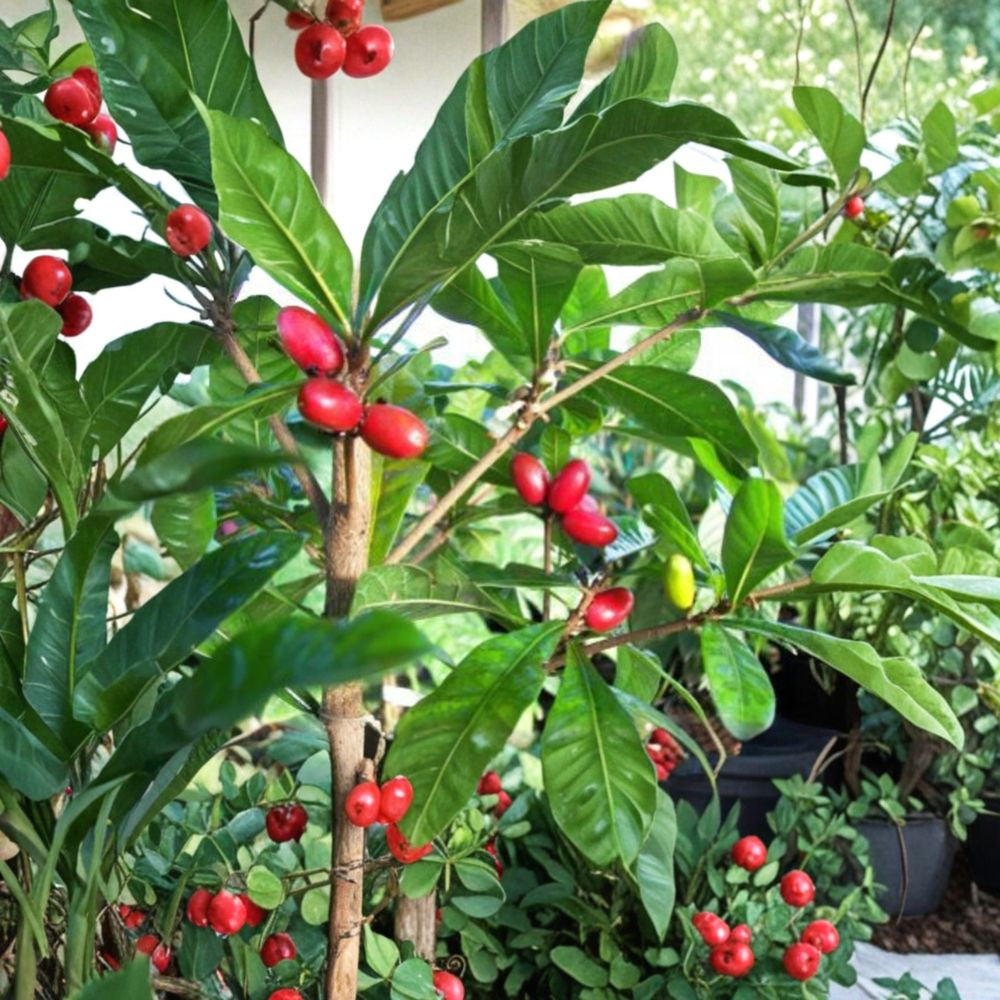
Miracle Fruit – Synsepalum dulcificum Live Tropical Plant | 2–3 Feet Tall | Ships in 3 Gallon Pot Taste-Altering Berry | Rare Exotic Plant | Container Friendly
Miracle Fruit – Synsepalum dulcificum Live Tropical Plant | 2–3 Feet Tall | Ships in 3 Gallon Pot Taste-Altering Berry | Rare Exotic Plant | Container Friendly
Couldn't load pickup availability
Grow your own fascinating Miracle Fruit plant, shipped in a 3-gallon pot and approximately 2–3 feet tall. Native to West Africa, this unique tropical plant produces small red berries that temporarily alter your taste perception.
The fruit contains a natural glycoprotein called miraculin, which inhibits the taste buds’ perception of sour flavors for 30 minutes to a couple of hours. After eating the berry, lemons taste like sweet lemonade, and other sour fruits like grapefruit and strawberries taste noticeably sweeter.
Miracle Fruit is also known for helping mask metallic aftertastes, making it popular among specialty gardeners and collectors of rare edible plants. It is best grown in containers and can remain in a large pot long-term.
You will receive a plant similar in size and health to the one shown in the listing photos.
You will receive:
✔️ 1 live Miracle Fruit plant
✔️ Height: approximately 2–3 feet tall
✔️ Shipped in 3-gallon nursery pot
✔️ Healthy, well-rooted plant
✔️ Secure packaging for safe arrival
🌼 Growing Information
Common Name: Miracle Fruit
Botanical Name: Synsepalum dulcificum
Plant Type: Evergreen tropical fruit shrub
Growth Stage: Young established plant
Sun Requirements: Bright indirect light to partial sun
Soil: Well-draining, acidic soil
Watering: Moderate; keep soil consistently moist but not soggy
Fruit: Small red berries
Effect Duration: 30 minutes to 2 hours
Mature Height: Approximately 6 feet tall
Mature Width: Approximately 2 feet wide
Cold Damage Temp: Around 28°F
Growth Rate: Slow to moderate
USDA Zones: 9–11
Container Friendly: Excellent (recommended)
💡 Care Tip: Miracle Fruit prefers acidic soil and consistent moisture. In cooler climates, grow in a container and bring indoors during cold weather.
Share