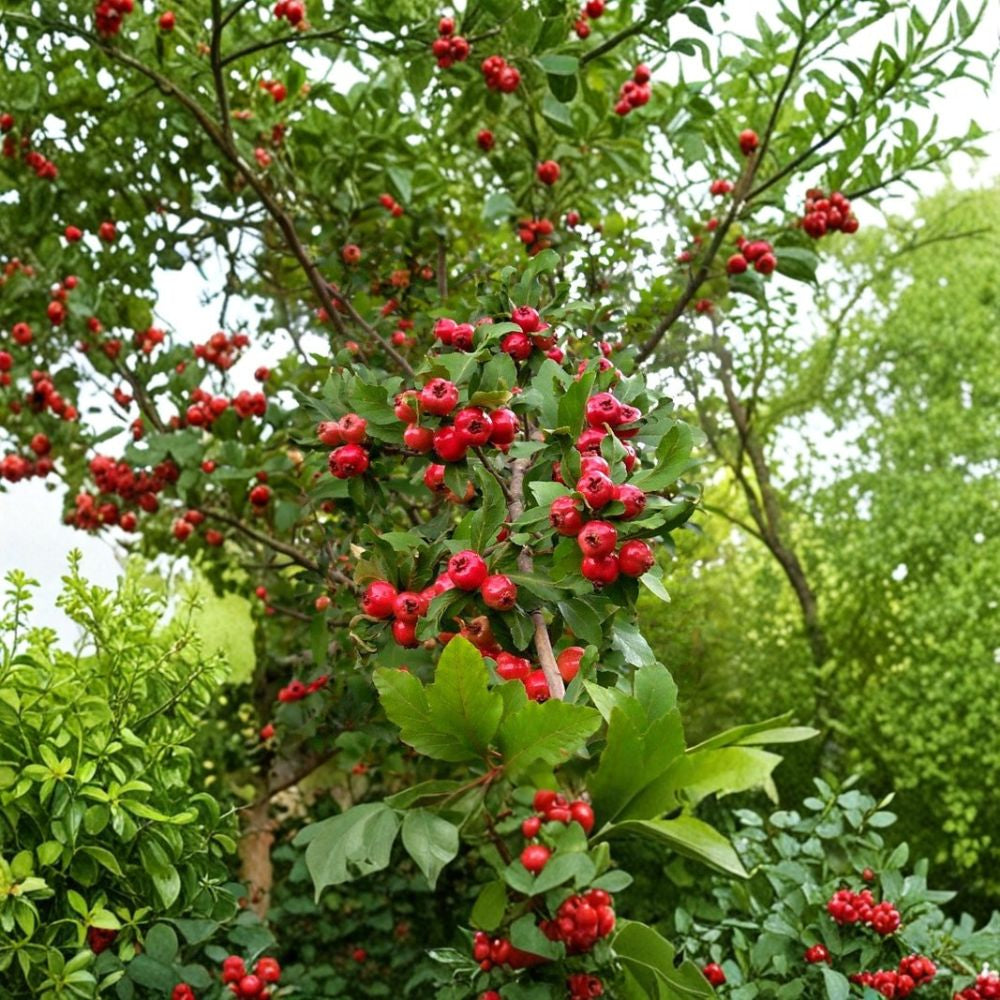
Mayhaw Fruit Trees – 2 Live Heirloom Seedlings | 1 Ft Tall Saplings | Red Mayhaw Hawthorn | Bare Root Edible Landscape Tree
Mayhaw Fruit Trees – 2 Live Heirloom Seedlings | 1 Ft Tall Saplings | Red Mayhaw Hawthorn | Bare Root Edible Landscape Tree
Couldn't load pickup availability
Add a classic Southern fruit tree to your garden with these 2 live Heirloom Mayhaw fruit tree seedlings. Mayhaw trees are well known across the southern United States for producing small bright red apple-shaped fruit, commonly used to make the famous Mayhaw jelly, jams, and preserves.
These young saplings are approximately 1 foot tall and are shipped bare root, ready to pot or plant in your garden. In spring and early summer, Mayhaw trees produce beautiful white blossoms, making them both a productive fruit tree and an attractive ornamental landscape plant.
Mayhaw trees are highly adaptable and can tolerate wet soils, drought, and even flooding once established. They are excellent for backyard orchards, wildlife gardens, windbreaks, and erosion control planting. Since Mayhaw requires cross-pollination, this listing includes two seedlings to help support future fruit production.
You will receive:
✔️ 2 live Mayhaw fruit tree seedlings
✔️ Height: approximately 1 foot tall
✔️ Heirloom Mayhaw variety
✔️ Shipped bare root for safe transport
✔️ Healthy young plants ready for potting or planting
🌼 Growing Information
Common Name: Mayhaw, May Hawthorn, Apple Hawthorn
Botanical Name: Crataegus aestivalis
Plant Type: Deciduous fruit tree or large shrub
Growth Stage: Seedling saplings
Sun Requirements: Full sun to partial shade
Soil: Moist, well-draining soil; adaptable to many soil types
Watering: Moderate; prefers moist soil conditions
Mature Height: 20–30 feet
Spacing: 15–20 feet
Growth Rate: Slow to moderate
USDA Zones: 6–11
Pollination: Requires cross-pollination (two trees recommended)
Fruit Harvest: Late April to May
💡 Care Tip:
When your plants arrive, soak the roots in water for up to 24 hours before planting. Start seedlings in rich potting soil and keep them in bright indirect light until established, then gradually introduce them to full sun.
Share