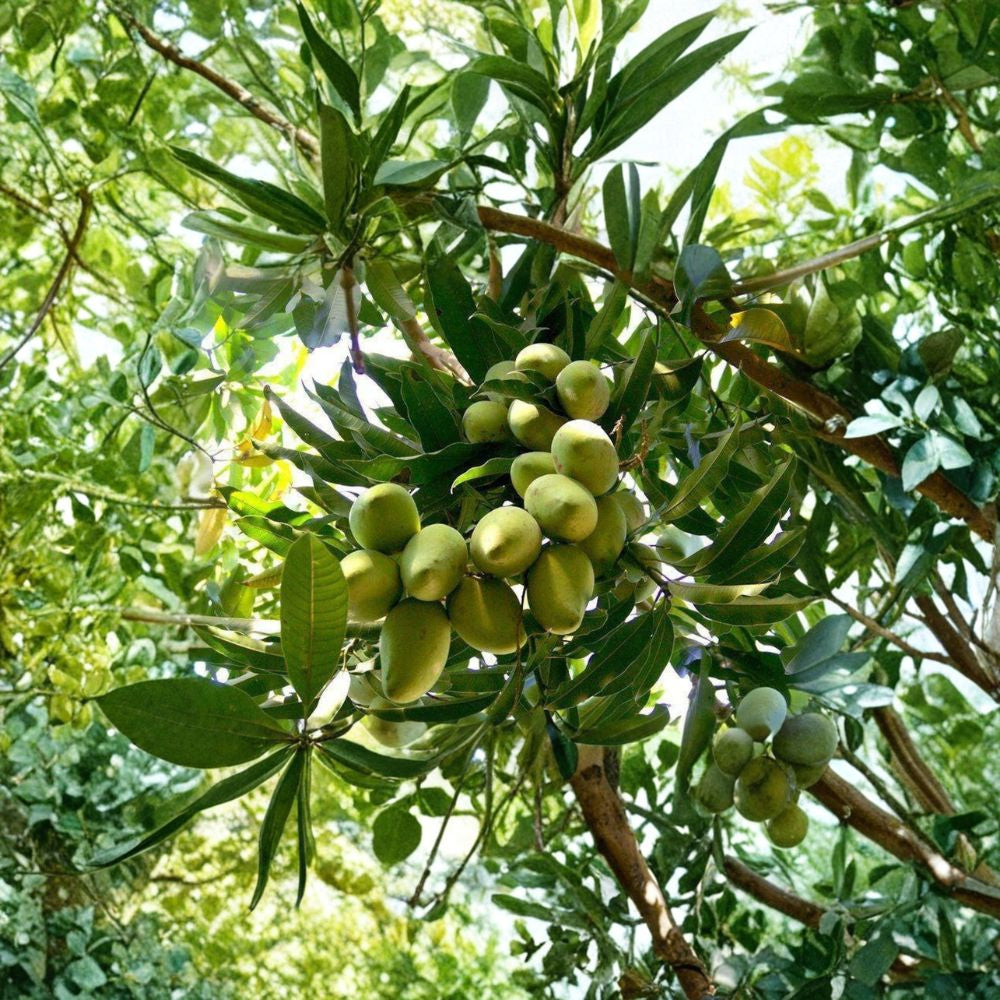
Manila Mango Tree – Mangifera indica ‘Manila’ Live Grafted Tree | 2–3 Feet Tall | Includes 3 Gallon Pot Early Season Mango | Sweet Tropical Fruit | Container Friendly
Manila Mango Tree – Mangifera indica ‘Manila’ Live Grafted Tree | 2–3 Feet Tall | Includes 3 Gallon Pot Early Season Mango | Sweet Tropical Fruit | Container Friendly
Couldn't load pickup availability
Grow your own delicious tropical fruit with this Manila Mango Tree, a healthy live plant with strong roots, approximately 2 to 3 feet tall and shipped in a 3-gallon nursery pot.
“Manila” is an early-season mango variety that typically flowers in January and February. Because it blooms during winter months, it should be protected from temperatures below 40°F, as cold exposure can damage buds and blossoms and reduce fruit production.
This variety is known for its sweet, juicy fruit and reliable growth in warm climates. It performs beautifully in full sun and can also be grown in a large container, allowing you to move it indoors to a sunroom or greenhouse during colder weather.
Perfect for backyard orchards, patios, and tropical edible gardens.
You will receive a plant similar in size and health to the one shown in the listing photos.
You will receive:
✔️ 1 live Manila mango tree
✔️ Height: approximately 2–3 feet tall
✔️ Shipped in 3-gallon nursery pot
✔️ Healthy, well-rooted plant
✔️ Secure packaging for safe arrival
🌼 Growing Information
Common Name: Manila Mango
Botanical Name: Mangifera indica ‘Manila’
Plant Type: Evergreen tropical fruit tree
Growth Stage: Young tree
Sun Requirements: Full sun (6–8+ hours daily)
Soil: Well-draining sandy loam or quality container mix
Watering: Moderate; allow top layer of soil to dry slightly between watering
Mature Height: 15–20 feet (smaller with pruning or container growing)
Growth Rate: Moderate to fast in warm climates
USDA Zones: 9–11
Cold Sensitivity: Protect below 40°F
Container Friendly: Yes
💡 Care Tip: Plant in a wind-sheltered, sunny location protected from frost. If growing in a container, move indoors during cold spells to protect winter blooms and ensure better fruit production.
Share