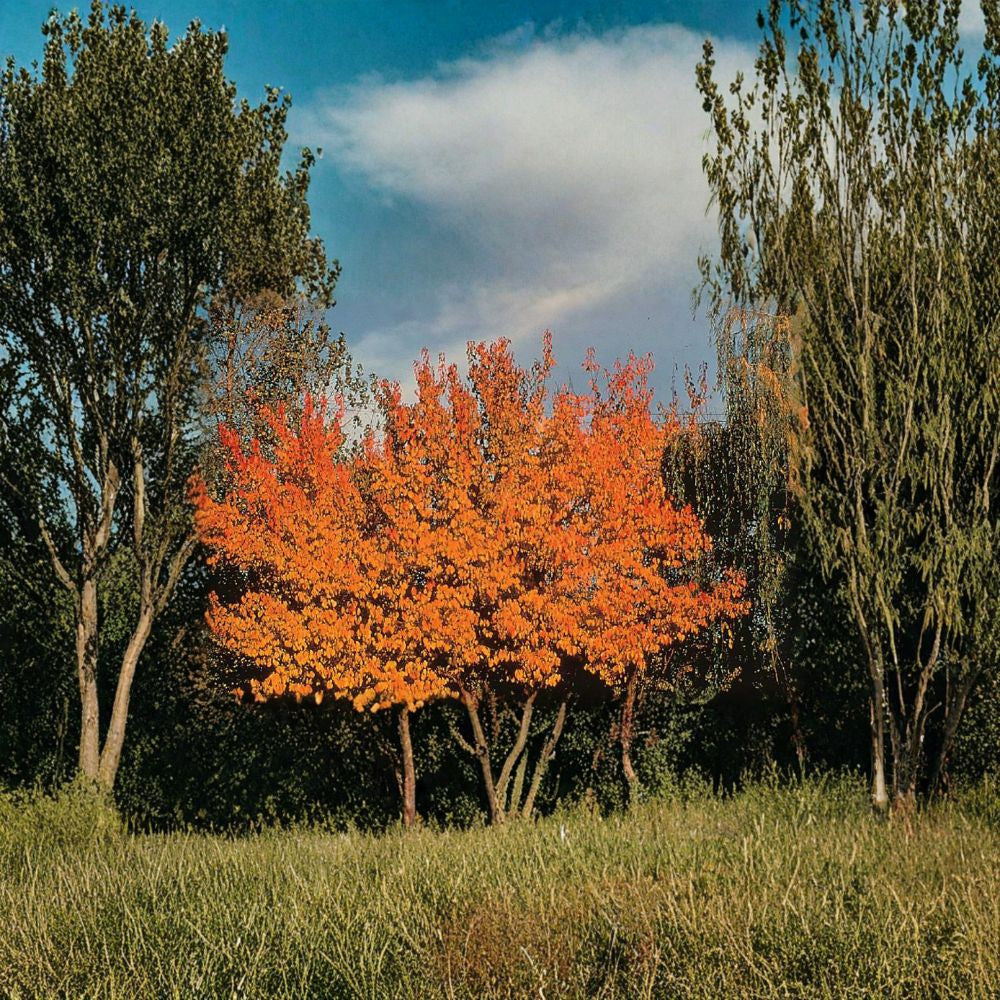
Mandchurian Apricot – Prunus armeniaca mandshurica 32 Seeds | Hardy Edible Fruit Tree | Cold Tolerant Pink Spring Blossoms | Golden Fall Color | Wildlife Friendly
Mandchurian Apricot – Prunus armeniaca mandshurica 32 Seeds | Hardy Edible Fruit Tree | Cold Tolerant Pink Spring Blossoms | Golden Fall Color | Wildlife Friendly
Couldn't load pickup availability
Grow your own Mandchurian Apricot (Prunus armeniaca mandshurica), a cold-hardy fruit tree valued for its fragrant pink spring blossoms and abundant edible apricots.
Native to Manchuria and Korea, this fast-growing deciduous tree reaches 10–20 feet tall with a rounded canopy. In early spring, showy single pink flowers bloom before the leaves emerge, creating a stunning ornamental display even in colder regions where other apricot varieties may not reliably flower.
By late summer, the tree produces small yellow fruits with a red blush. The apricots are edible, flavorful, and perfect for fresh eating, jams, and jellies. The fruit also supports birds and wildlife. In fall, the foliage turns a rich golden-orange, adding seasonal beauty to your landscape.
This larger seed quantity is ideal for orchard planting, homesteads, wildlife food plots, or growing multiple trees for improved yields.
You will receive seeds similar in quality to those shown in the listing photos.
You will receive:
✔️ 32 Prunus armeniaca mandshurica seeds
✔️ Clearly labeled seed packet
✔️ Sowing instructions included
✔️ Non-pretreated seeds
🌼 Growing Information
Common Name: Mandchurian Apricot, Manchurian Apricot
Botanical Name: Prunus armeniaca mandshurica
Plant Type: Deciduous fruiting tree
Growth Stage: Seed
Sun Requirements: Full sun
Soil: Average, well-drained soil; prefers moisture-retentive soil with good drainage
Watering: Moderate; moderate to high drought tolerance once established
Mature Height: 10–20 feet
Growth Rate: Fast
USDA Zones: 3–7
Container Friendly: Yes (can be trained as bonsai when young)
💡 Care Tip: Soak seeds for 24 hours, then provide 30–60 days of warm stratification followed by 90–120 days of cold stratification at approximately 40°F before sowing 1 inch deep.
Share