Madu Sapodilla Seeds (Manilkara zapota 'Madu') – 35+ Premium Fresh High-Yield Sweet Honey Sawo Seeds
Madu Sapodilla Seeds (Manilkara zapota 'Madu') – 35+ Premium Fresh High-Yield Sweet Honey Sawo Seeds
Couldn't load pickup availability
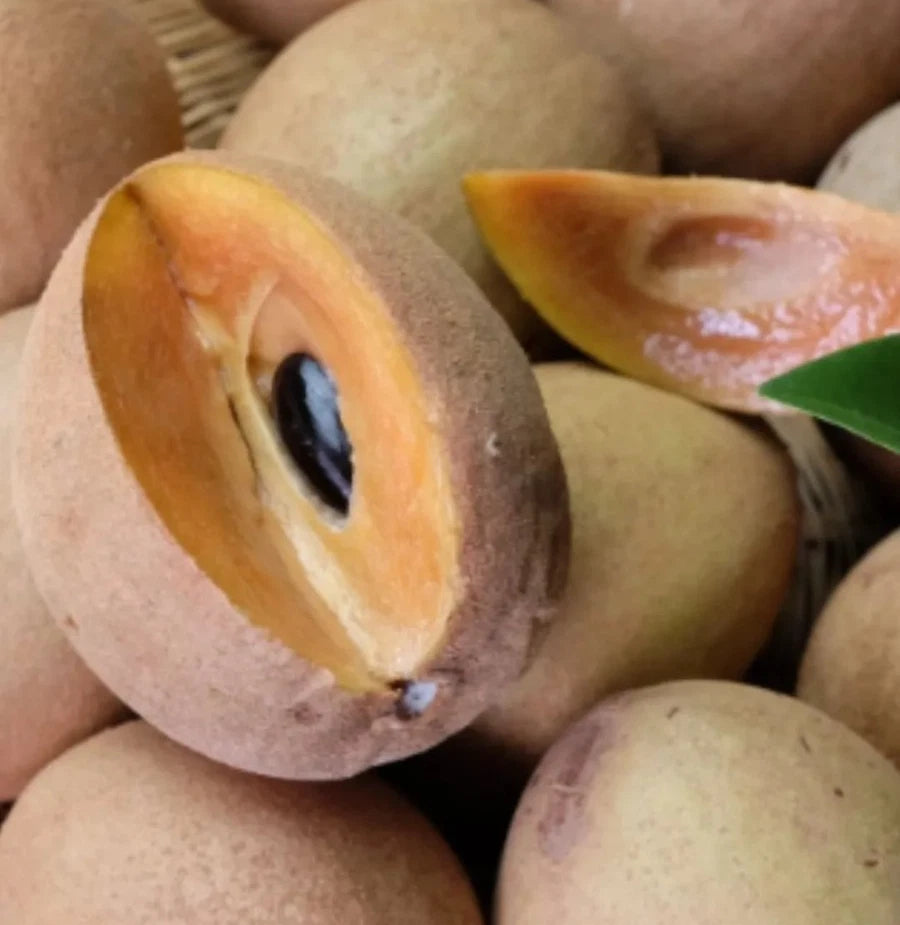
Grace your private estate orchard or luxury garden gallery with the exceptional sweetness of our premium, estate-grade Madu Sapodilla (Manilkara zapota) seeds. Revered across Southeast Asia as the absolute pinnacle of sawo cultivars, the legendary "Madu" (meaning Honey in Indonesian) is highly sought after by tropical fruit connoisseurs for its unparalleled sugar content and refined texture. Slicing into a perfectly ripe Madu Sapodilla reveals a beautiful, warm copper-brown, fine-grained flesh that is incredibly smooth, velvety, and almost entirely fiber-free. The flavor profile is a sublime natural masterpiece—delivering an intensely sweet, rich brown-sugar and maple-syrup richness that tastes exactly like pure wildflower honey, complemented by a delicate, warm-spiced aroma.
Our fresh premium selection contains 35+ high-viability, thoroughly cleaned seeds, hand-selected at peak maturity from elite, heavy-yielding parent trees to guarantee exceptional germination rates and outstanding seedling vigor. Highly favored for both structural landscape design and high-end container cultivation, the Madu Sapodilla tree is exceptionally beautiful. It features a naturally symmetrical, dense canopy of glossy, deep-green leathery leaves that remain vibrant year-round. It is highly resilient, wind-resistant, and adapts beautifully to container life on sun-drenched terraces, private balconies, or inside warm greenhouse estates.
You will receive:
-
✔️ 35+ Premium-quality Madu Sapodilla (Manilkara zapota) seeds
-
✔️ Hand-selected and professionally cleaned fresh stock for exceptional germination potential
-
✔️ Packaged in professional, moisture-controlled botanical sachets to maintain long-term freshness
-
✔️ Detailed sapodilla germination and container-shaping guide included
🌳 Cultivation & Care Information
-
Botanical Name: Manilkara zapota 'Madu'
-
Common Name: Madu Sapodilla / Sawo Madu / Honey Chikoo
-
Plant Type: Slow-to-moderate growing, highly ornamental tropical evergreen tree
-
Sun Requirements: Full sun (Essential: Requires at least 6–8 hours of intense, direct daily sunlight to fuel its lush canopy growth, stimulate continuous blooming, and maximize the rich, honeyed sugars within the ripening fruit).
-
Soil / Medium: Exceptionally adaptable to a wide range of soils, but thrives best in a deep, fertile, loose, sandy loam potting mix with excellent drainage and a neutral to slightly acidic pH (6.0–7.0).
-
Watering: Water deeply and regularly during the establishment phase. While mature trees are incredibly drought-tolerant once established, consistent and deep hydration combined with excellent drainage produces the plumpest, juiciest fruit crops.
-
Growth Habit: An exceptionally elegant ornamental tree with a highly symmetrical, dense crown of dark glossy evergreen leaves and small, bell-like white blossoms that transition into round, rustic-brown, sugar-sweet fruits.
-
Temperature & Humidity: Thrives effortlessly in hot, humid tropical and subtropical environments. Entirely frost-intolerant when young; must be protected or moved to a bright, warm indoor location if winter temperatures dip below 10°C.
💡 Pro Growing Tip: Sapodilla seeds possess a hard, glossy, water-resistant outer coat that naturally regulates moisture absorption. To ensure a rapid and highly uniform sprout across this premium 35+ seed batch, use a nail file or fine sandpaper to gently scarify (scuff) the dark outer shell of the seed, focusing on the curved edge (avoiding the pointed tip where the embryo resides). Soak the scarified seeds in warm distilled water for 24 to 48 hours to allow the seed to swell. Sow the seeds roughly 1/2 inch deep in starter pots filled with a sterile, warm, well-draining seed-starting mix. Maintain a warm environment (around 25°C–30°C) with bright, indirect light, and keep the soil damp but never soggy. Sprouting typically begins reliably within 4 to 8 weeks!
Share