Kapok Tree (Silk Cotton Tree) – Ceiba pentandra Seeds | 240 Fast Growing Tropical Tree Seeds | Zones 9–11
Kapok Tree (Silk Cotton Tree) – Ceiba pentandra Seeds | 240 Fast Growing Tropical Tree Seeds | Zones 9–11
Couldn't load pickup availability
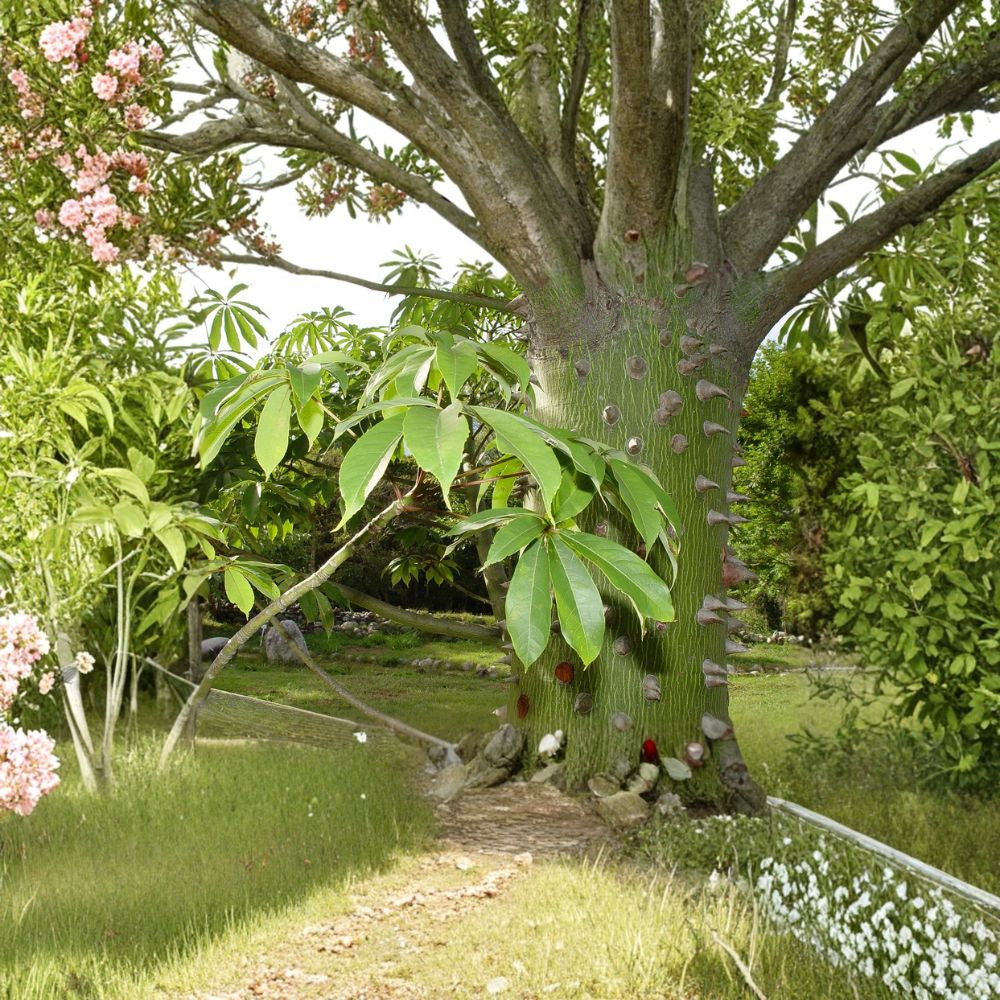
Establish a dramatic tropical canopy with these 240 Kapok (Ceiba pentandra) seeds. Known as the Silk Cotton Tree, Kapok is one of the most impressive rainforest giants, valued for its rapid growth, towering height, and massive umbrella-shaped crown.
In ideal tropical conditions, Kapok trees can reach 150–200 feet tall, sometimes growing over 10 feet per year when young. Juvenile trees develop protective spines along the trunk, while mature specimens form enormous buttressed roots that provide storm stability and drought resilience.
Creamy white to pale pink flowers appear before the leaves emerge and are pollinated by bats. Large woody seed pods later split open to reveal silky, cotton-like fiber surrounding the seeds. This fiber has long been used in pillows, flotation devices, and natural padding due to its buoyancy and water resistance.
An exceptional choice for tropical shade, reforestation projects, wildlife habitat, and large landscapes, Kapok is a striking and historically significant tree.
✔ 240 Kapok seeds
✔ Fresh, untreated seeds
✔ Labeled packet with sowing instructions
✔ Suitable for USDA Zones 9–11
✔ Ideal for bulk planting or restoration projects
🌿 Plant Details
Botanical Name: Ceiba pentandra
Common Names: Kapok Tree, Silk Cotton Tree, Ceiba, Jumbie Tree
Plant Type: Large deciduous tropical tree
Height: 150–200 feet
Canopy: Wide, umbrella-shaped
Bloom Color: Creamy white to pale pink
Sun: Full Sun
Soil: Rich, well-drained soil
Water: Moderate; drought tolerant once established
Growth Rate: Fast
USDA Zones: 9–11
🌱 Sowing Instructions
-
Soak seeds in water for 24 hours.
-
No stratification required.
-
Sow 1/2 inch deep in well-drained soil.
-
Keep evenly moist (not waterlogged).
-
Warm temperatures improve germination success.
🌞 Best Uses
• Tropical and subtropical shade tree
• Reforestation & conservation projects
• Large estates and open landscapes
• Botanical gardens
• Wildlife-supporting environments
⚠️ Important: Kapok is an extremely large tree and should only be planted where ample space is available.
Share