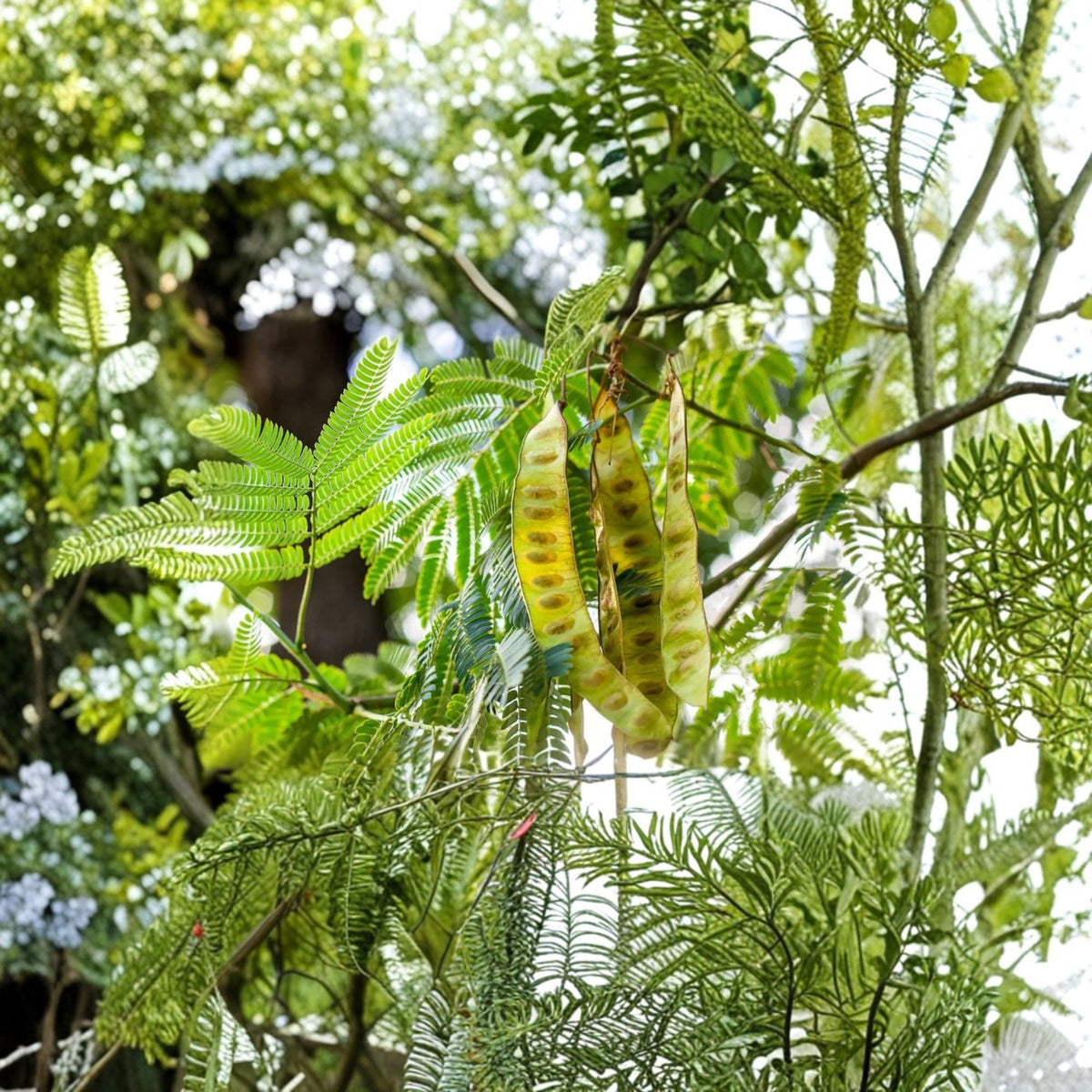
Honey Locust Tree, Gleditsia triacanthos Live Potted Tree, 18–28 Inches, Native North American Tree, Windbreak, Wildlife Habitat, Bonsai
Honey Locust Tree, Gleditsia triacanthos Live Potted Tree, 18–28 Inches, Native North American Tree, Windbreak, Wildlife Habitat, Bonsai
Couldn't load pickup availability
Honey Locust Tree – Gleditsia triacanthos
Live Potted Tree | 18–28 Inches Tall
Add a hardy native North American tree to your landscape with a Honey Locust! Known for its delicate foliage, bright golden-yellow fall color, and adaptability, Honey Locust is a versatile deciduous tree with uses ranging from wildlife habitat and windbreaks to bonsai projects.
Native to central and eastern North America, this fast-growing tree can reach impressive mature dimensions and is valued for its ability to tolerate challenging growing conditions.
Please note: This is a thorny form of Honey Locust. Its long, sharp thorns make it unsuitable for many residential landscapes. Consider placement carefully, especially around children, pets, walkways, and frequently used outdoor areas.
Plant Details
-
Common name: Honey Locust, Thorny Locust, Sweet Locust
-
Botanical name: Gleditsia triacanthos
-
Shipping height: Approximately 18–28 inches
-
Plant type: Live deciduous tree
-
Native range: Central and eastern North America
-
Growth rate: Fast growing
-
Mature height: Up to approximately 80 feet
Features & Benefits
-
Fine, delicate leaves create filtered shade.
-
Foliage turns bright yellow in fall.
-
Flowers provide nectar for bees and other pollinators.
-
Seed pods provide food for wildlife and livestock.
-
Dense plantings can provide wildlife shelter and protective cover.
-
Adaptable tree for windbreaks, hedges, and erosion-control projects.
-
Small foliage is attractive for bonsai training.
-
Tolerates wind, salt, drought, and urban pollution once established.
-
Deer resistant, according to the seller.
Growing Information
-
Sunlight: Full sun to partial shade.
-
Soil: Well-draining, moist, organic-rich soil.
-
Water: Provide regular moisture while establishing. Established trees tolerate periods of drought.
-
Hardiness: Confirm your local suitability before planting, as a USDA zone range was not provided.
The fine foliage and open branch structure allow filtered sunlight to reach the ground, making it possible for grasses and shrubs to grow beneath the tree.
Important Thorn Warning
This listing is for a thorny Honey Locust. Long, sharp thorns can pose a safety concern. Avoid planting near paths, play areas, animal enclosures, or other places where people and animals may come into contact with the branches.
Additional Uses
Honey Locust wood is dense, durable, and naturally rot resistant. It has traditionally been used for fence posts, tool handles, railroad ties, and firewood.
Shipping Information
-
Available as 18–28-inch potted trees.
-
Fully rooted in soil-less growing mix and shipped in their pots.
-
Ships with leaves during spring and summer.
-
Trees are naturally dormant and may arrive without leaves during fall and winter.
-
Ships via UPS.
-
Free shipping to most locations.
-
We cannot ship to PO Boxes, Alaska, Hawaii, or US Territories without an additional freight surcharge.
-
Scenic Hill Farm is a licensed Oregon nursery.
A versatile native tree for carefully planned windbreaks, wildlife plantings, erosion-control projects, and bonsai enthusiasts!
Share