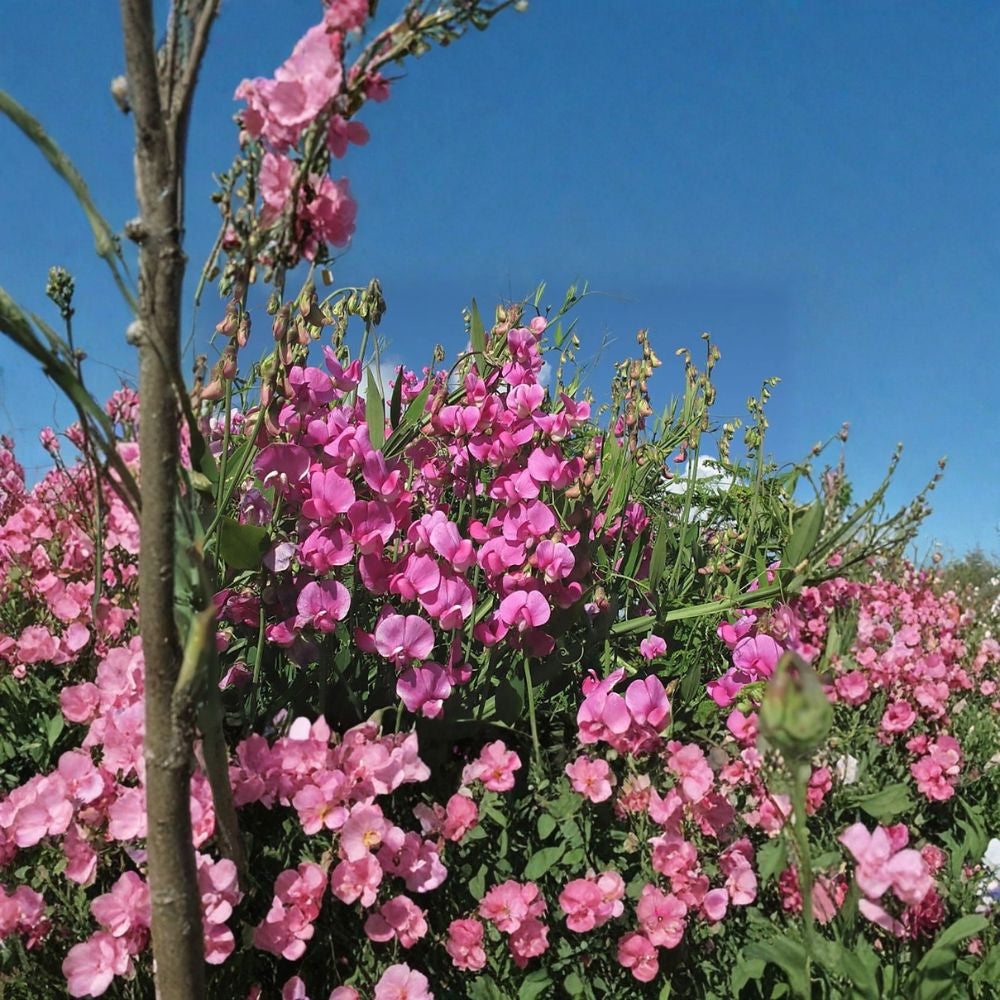
Everlasting Pea (Perennial Pea) – Lathyrus latifolius Seeds | 20 Showy Perennial Vine Seeds | Easy to Grow | Zones 3–8
Everlasting Pea (Perennial Pea) – Lathyrus latifolius Seeds | 20 Showy Perennial Vine Seeds | Easy to Grow | Zones 3–8
Couldn't load pickup availability
Add long-lasting color to your garden with 20 Everlasting Pea (Lathyrus latifolius) seeds. This vigorous, easy-to-grow perennial vine produces abundant clusters of rose, pink, lavender, or white pea-like flowers from early summer through fall.
A perennial cousin to annual sweet peas, Everlasting Pea offers extended blooms without the need for replanting each year. While the flowers are not fragrant, they are excellent for cutting and can also be dried. Hummingbirds and butterflies are frequently attracted to the bright blossoms.
This fast-growing herbaceous vine climbs 6–9 feet using twining stems or can sprawl along the ground as a flowering ground cover. It spreads by rhizomes and may self-seed, making it ideal for sunny slopes, fences, cottage gardens, and naturalized areas.
✔ 20 Everlasting Pea seeds
✔ Fresh, untreated seeds
✔ Clearly labeled packet with sowing instructions
✔ Hardy in USDA Zones 3–8
✔ Reliable perennial bloomer
🌿 Plant Details
Botanical Name: Lathyrus latifolius
Common Names: Everlasting Pea, Perennial Pea, Wild Sweet Pea
Plant Type: Herbaceous perennial vine
Height: 6–9 feet
Spread: 3–6 feet
Bloom Time: June–September
Bloom Colors: Pink, rose, lavender-mauve, or white
Sun: Full Sun (tolerates light shade)
Soil: Well-drained, average soil
Water: Medium; moderate drought tolerance once established
Growth Rate: Fast
USDA Zones: 3–8
🌱 Sowing Instructions
-
Soak seeds in warm water for 24 hours.
-
No stratification required.
-
Sow 1/2 inch deep in well-drained soil.
-
Keep evenly moist (not wet).
-
Ideal germination temperature: 60–70°F.
Start indoors 4–6 weeks before last frost, or sow outdoors in early spring after danger of frost has passed.
🌼 Garden Uses
• Trellises, fences, and arbors
• Cottage and pollinator gardens
• Ground cover for slopes and embankments
• Containers
• Trail over walls or rocky areas
Share