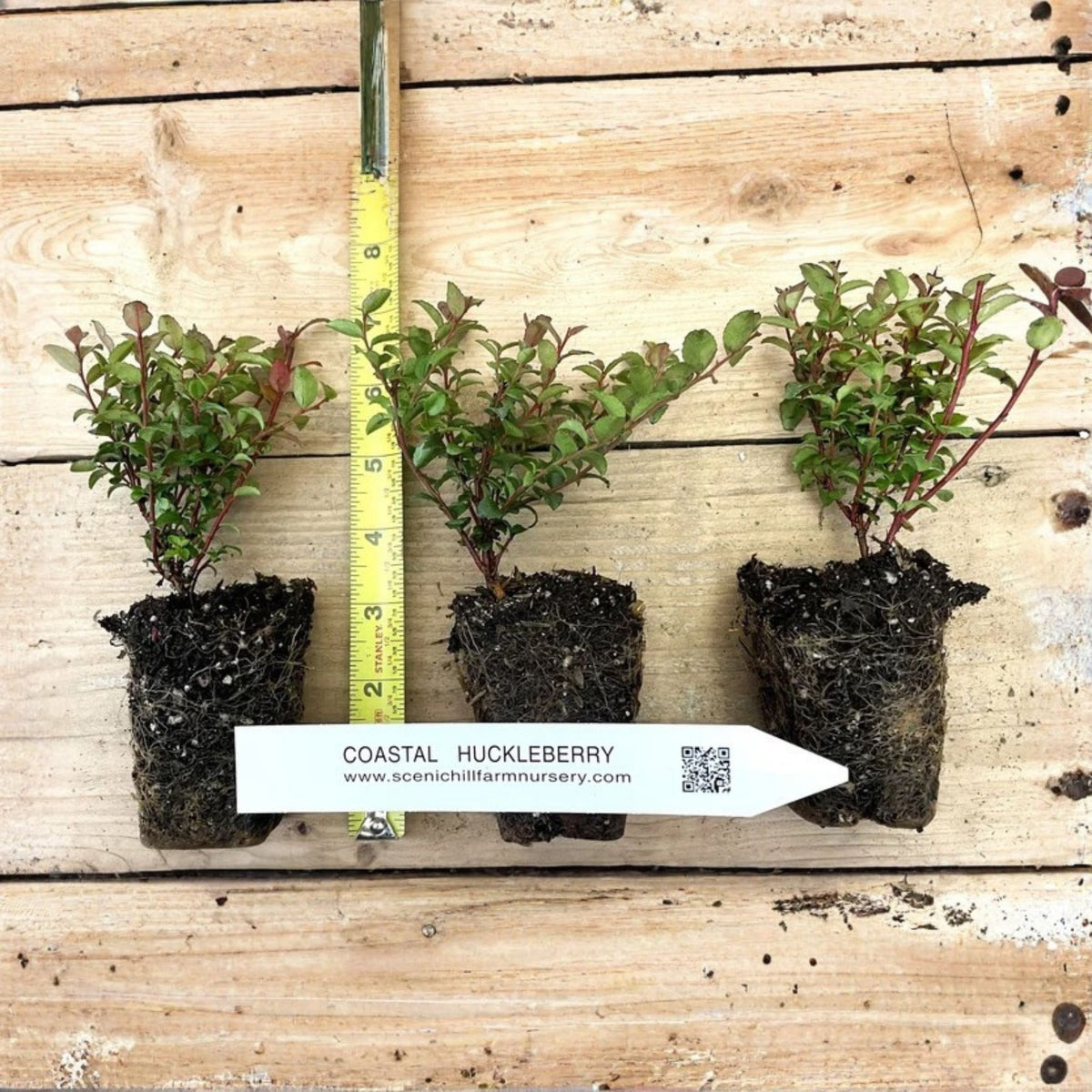
Evergreen Huckleberry Live Plant, Vaccinium ovatum, 1-Year-Old Potted Shrub, Edible Dark Blue Berries, Pacific Northwest Native, Floral Foliage
Evergreen Huckleberry Live Plant, Vaccinium ovatum, 1-Year-Old Potted Shrub, Edible Dark Blue Berries, Pacific Northwest Native, Floral Foliage
Couldn't load pickup availability
Evergreen Huckleberry – 1-Year-Old Potted Plant
Vaccinium ovatum
Bring the beauty of the Pacific coastal forests to your garden with Evergreen Huckleberry (Vaccinium ovatum). This attractive broadleaf evergreen shrub offers year-round foliage, delicate spring flowers, and delicious berries that ripen to a rich dark blue-black color in fall.
This listing is for 1-year-old potted plants, grown from tissue culture stock—not bare-root plants dug from the wild.
Plant Features
-
Botanical name: Vaccinium ovatum
-
Common name: Evergreen Huckleberry
-
Plant age: 1 year
-
Plant type: Broadleaf evergreen shrub
-
Form: Potted plant
-
Native range: Pacific coastal forests
-
USDA Zones: 7–9; Zone 6 with wind protection
Beautiful Foliage, Flowers, and Berries
Evergreen Huckleberry provides seasonal interest throughout the year:
-
Evergreen foliage: Attractive leaves and branches remain on the shrub year-round.
-
Spring flowers: Small pinkish-white flowers provide a nectar source for bees and butterflies.
-
Summer berries: Young berries develop a red color.
-
Fall harvest: Berries ripen to a dark blue-black shade and are enjoyed by people, birds, and other wildlife.
The evergreen leaves and branches are also valued for floral arrangements. Huckleberry leaves are traditionally used to make leaf tea.
Mature Size and Growing Habit
Evergreen Huckleberry can develop into a compact, attractive shrub.
-
In full sun, it can reach approximately 4 feet tall and wide.
-
In full shade, it can grow up to approximately 10 feet tall if left unpruned.
In hotter climates, provide full or afternoon shade to help protect the plant.
Growing and Care Information
Evergreen Huckleberry grows best with conditions similar to those preferred by blueberries.
-
Light: Full sun in suitable climates; afternoon or full shade in hotter areas.
-
Soil: Acidic, slightly moist, well-drained soil.
-
Water: Provide regular watering and avoid allowing the soil to dry out completely.
-
Hardiness: USDA Zones 7–
Share