English Yew – Taxus baccata 10 Seeds | Evergreen | Topiary & Bonsai Favorite Long-Lived | Dense Evergreen Foliage | Classic Landscape Tree
English Yew – Taxus baccata 10 Seeds | Evergreen | Topiary & Bonsai Favorite Long-Lived | Dense Evergreen Foliage | Classic Landscape Tree
Couldn't load pickup availability
English Yew (Taxus baccata) is a long-lived, evergreen conifer prized for its dense foliage, elegant form, and exceptional tolerance to pruning. Native to Europe, Southwestern Asia, and Northern Africa, it has been cultivated for centuries in gardens, parks, and historic landscapes.
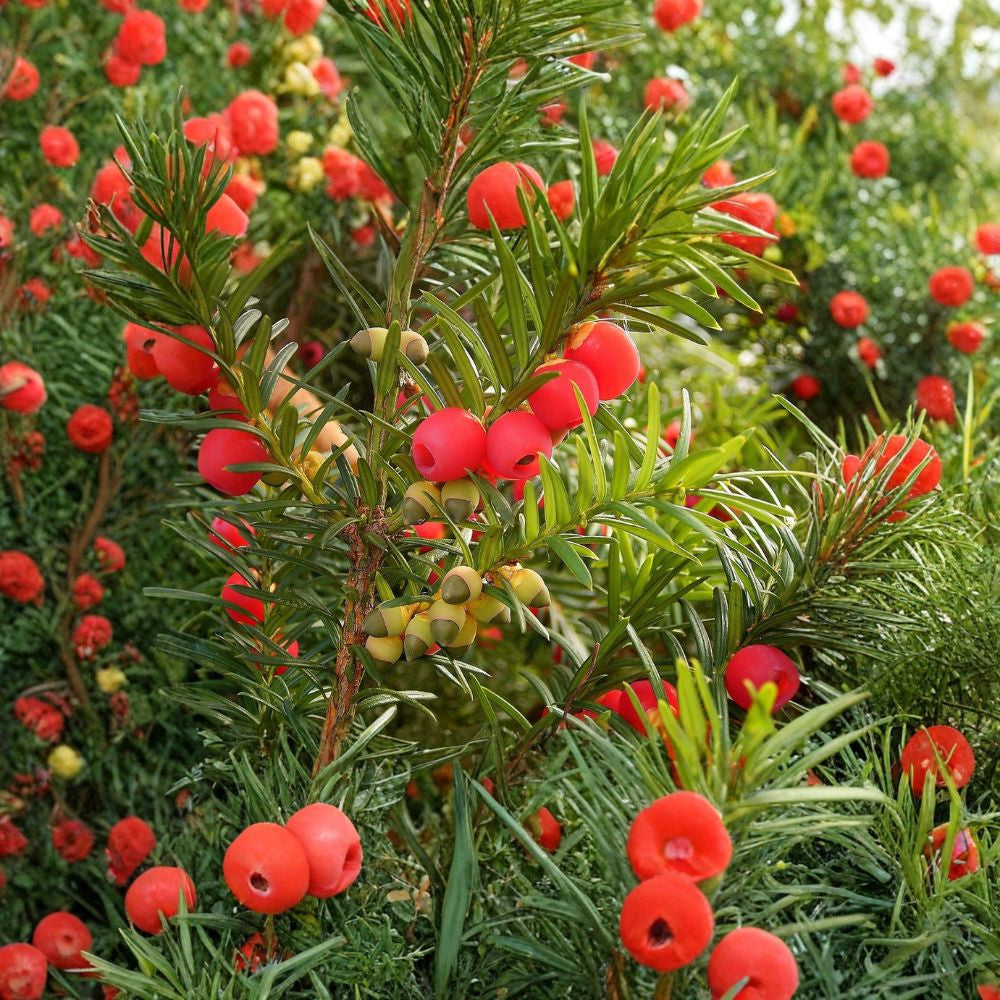
This slow-growing tree or large shrub typically reaches 30–60 feet tall and develops thick trunks with attractive reddish-brown scaly bark as it matures. The dark green, flat needles are arranged in two ranks, creating a lush, refined appearance year-round. New growth emerges light green for beautiful seasonal contrast.
Female plants produce bright red, berry-like arils in late summer and fall. These ornamental fruits are attractive to birds, which help disperse the seeds. (Note: All parts of the plant are highly toxic except the fleshy red aril surrounding the seed.)
English Yew is one of the best evergreen conifers for shady areas and is widely used for hedges, screens, topiary, foundation plantings, and bonsai. It responds exceptionally well to pruning and shaping.
This listing is for 10 high-quality seeds.
You will receive:
✔️ 10 Taxus baccata seeds
✔️ Clearly labeled seed packet
✔️ Sowing instructions included
✔️ Seeds are not pretreated
🌿 Growing Information
Common Name: English Yew
Botanical Name: Taxus baccata
Plant Type: Evergreen conifer shrub or small tree
Sun: Full Sun to Part Shade (tolerates full shade)
Soil: Evenly moist, fertile, well-drained soil
Water: Medium
Growth Rate: Slow
Mature Height: 30–60 ft
Spread: 15–25 ft
USDA Zones: 6–8
Maintenance: Low
⚠️ Important: All parts of the plant are highly toxic except the red aril. Keep away from pets and children.
💡 Germination Instructions:
Soak seeds in water for 24 hours. Warm stratify for 90–200 days, followed by cold stratification for 60–120 days at approximately 40°F in a moist (not wet) medium. Sow 1/4 inch deep and keep evenly moist.
Share