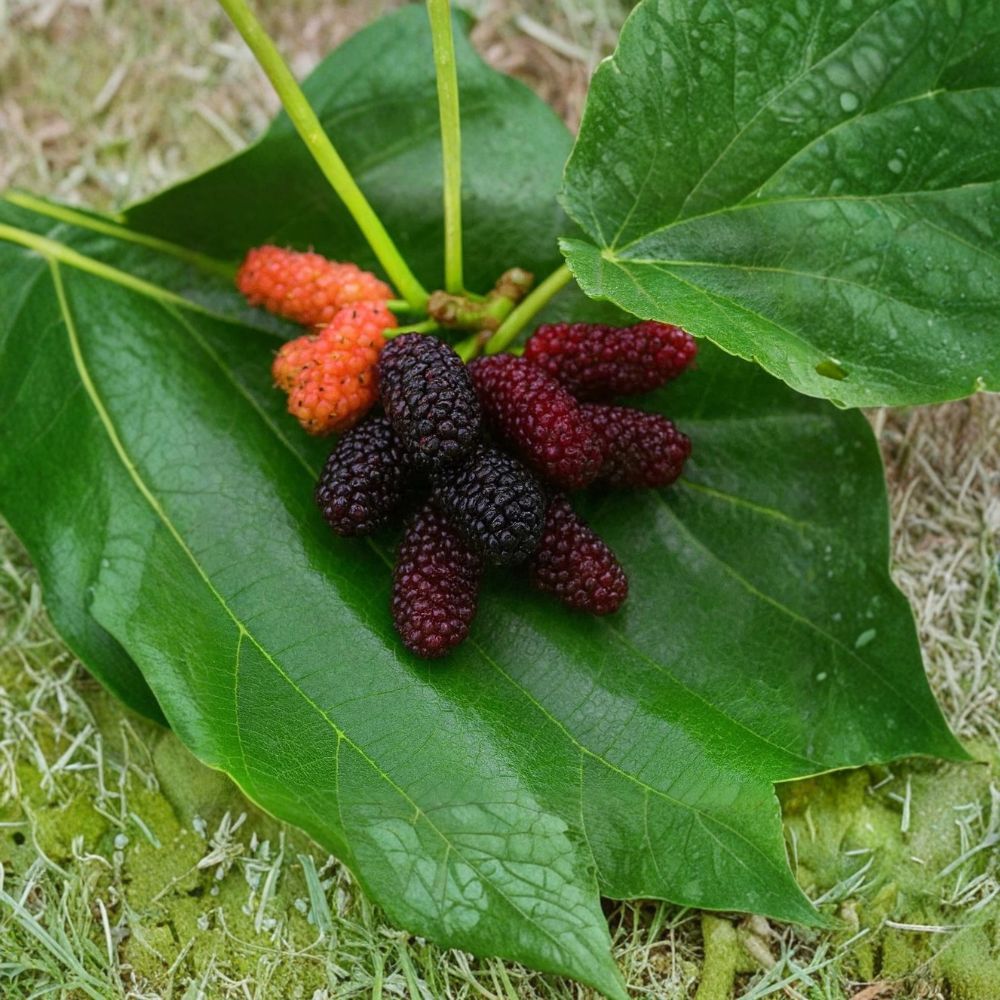
Dwarf Everbearing Mulberry – Morus nigra Live Starter Plants | 4–6 Inches Tall | Rooted Plugs – No Pot Sweet Berry Fruit Tree | Patio & Backyard Friendly | Easy to Grow
Dwarf Everbearing Mulberry – Morus nigra Live Starter Plants | 4–6 Inches Tall | Rooted Plugs – No Pot Sweet Berry Fruit Tree | Patio & Backyard Friendly | Easy to Grow
Couldn't load pickup availability
Start your homegrown fruit journey with these 2 live Dwarf Everbearing Mulberry starter plants, shipped as healthy rooted plugs ready for planting. These compact fruit trees are perfect for patios, balconies, backyard gardens, or container growing.
The Dwarf Everbearing Mulberry (Morus nigra) produces sweet, blackberry-like berries over an extended harvest season. These delicious fruits are great for fresh eating and can also be used in jams, desserts, and homemade preserves.
This compact mulberry variety is self-pollinating, meaning a single plant can produce fruit. It is ideal for small gardens and patio pots, and can be maintained at a manageable size with occasional pruning.
Mulberry trees are fast growing, hardy, and beginner friendly, making them a rewarding addition to edible gardens or backyard orchards.
You will receive plants similar in size and health to the ones shown in the listing photos.
You will receive:
✔️ 2 live Dwarf Everbearing Mulberry plants
✔️ Height: approximately 4–6 inches
✔️ Healthy rooted starter plugs
✔️ Shipped without pots for safe transit
✔️ Secure packaging for safe arrival
🌼 Growing Information
Common Name: Dwarf Everbearing Mulberry
Botanical Name: Morus nigra
Plant Type: Dwarf fruit tree
Growth Stage: Starter plug plants
Sun Requirements: Medium to full sun (6–8 hours daily preferred)
Soil: Well-draining potting mix or garden soil
Watering: Moderate; keep soil moist during establishment
Mature Height: 6–10 feet with pruning (can be maintained smaller)
Growth Rate: Moderate to fast
USDA Zones: 5–10
Container Friendly: Yes
💡 Care Tip: Mulberry trees are deciduous, so they may arrive dormant without leaves during colder months. This is normal and the plant will produce new growth once temperatures warm and the growing season begins.
Share