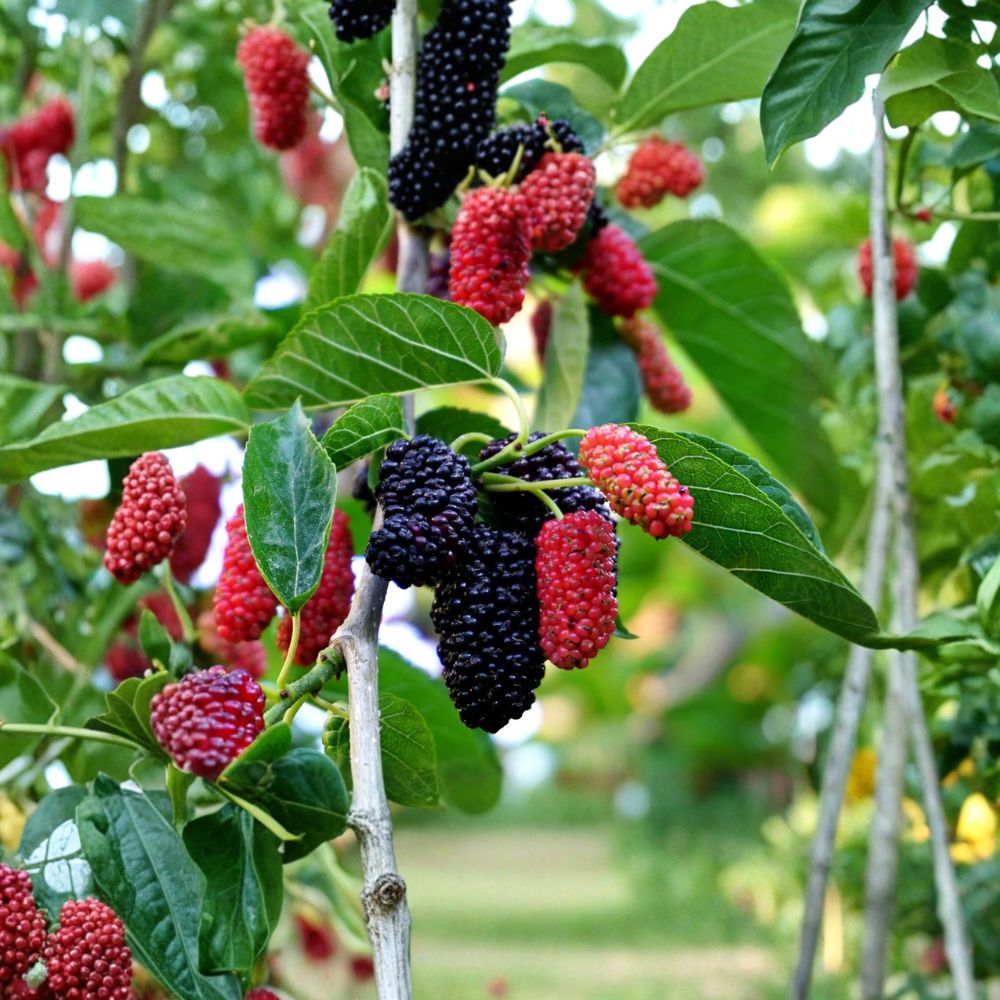
Dwarf Everbearing Mulberry – Morus nigra Live Plant | 4–6 Inch Rooted Starter | Sweet Edible Fruit Tree | Container & Patio Friendly
Dwarf Everbearing Mulberry – Morus nigra Live Plant | 4–6 Inch Rooted Starter | Sweet Edible Fruit Tree | Container & Patio Friendly
Couldn't load pickup availability
Grow delicious homegrown berries with this Dwarf Everbearing Mulberry (Morus nigra) live starter plant, approximately 4–6 inches tall and shipped rooted without a pot, ready for transplanting into your garden or container.
This compact fruit tree is prized for its long fruiting season and sweet, juicy berries that ripen from late spring through summer. The berries are dark reddish-black, soft, and about 1.5 inches long, making them perfect for fresh eating, jams, juice, smoothies, and desserts.
Unlike larger mulberry trees, the Dwarf Everbearing variety stays compact, typically growing around 5–6 feet tall, making it ideal for patios, containers, small gardens, and edible landscapes. The plant can be shaped into a single-trunk tree or bushy shrub depending on your pruning preference.
This variety is self-pollinating, pest resistant, and easy to grow, often producing fruit within 1–3 years after planting.
You will receive:
✔️ 1 Dwarf Everbearing Mulberry live plant
✔️ Height: approximately 4–6 inches
✔️ Rooted starter plant (no pot)
✔️ Healthy young plant ready for transplanting
✔️ Secure packaging for safe arrival
🌼 Growing Information
Common Name: Dwarf Everbearing Mulberry
Botanical Name: Morus nigra
Plant Type: Deciduous fruit tree / edible shrub
Growth Stage: Rooted starter plant
Sun Requirements: Full sun
Soil: Well-drained soil enriched with compost
Watering: Moderate; keep soil evenly moist during establishment
Mature Height: 5–6 feet (prunable)
Mature Spread: 10–15 feet
Growth Rate: Fast
USDA Zones: 5–10
Container Friendly: Yes – excellent for pots and patios
Fruit Season:
Late spring through summer with extended fruit production.
Pollination:
Self-pollinating – only one plant is needed for fruit production.
💡 Care Tip: Mulberries produce fruit on new growth, so pruning in late winter or early spring helps encourage strong branches and better berry production.
Share