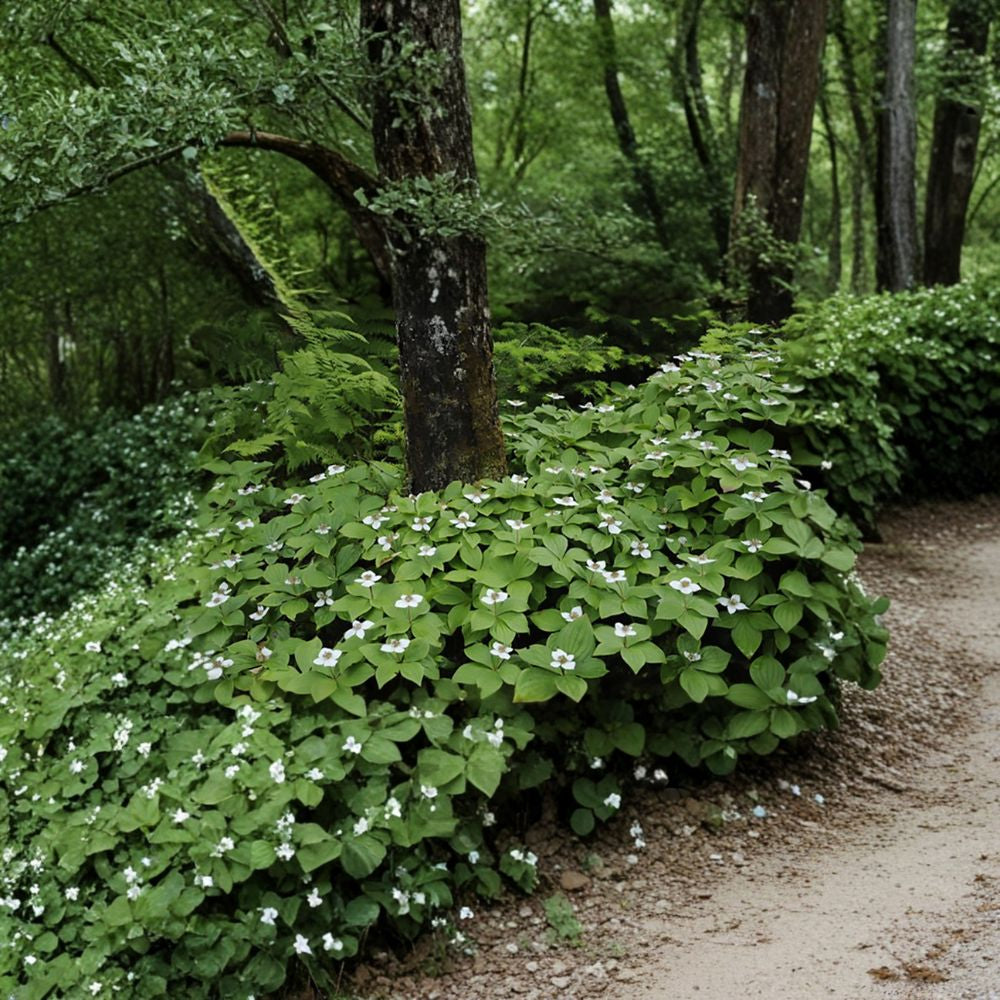
Creeping Dogwood (Bunchberry) – Cornus canadensis Seeds | 60 Seeds | Hardy Native Shade Ground Cover | Woodland Plant
Creeping Dogwood (Bunchberry) – Cornus canadensis Seeds | 60 Seeds | Hardy Native Shade Ground Cover | Woodland Plant
Couldn't load pickup availability
Bring natural woodland beauty to your garden with Creeping Dogwood (Cornus canadensis), also known as Bunchberry. This low-growing native perennial spreads gently by underground rhizomes, forming a dense, attractive ground cover in cool, shaded environments.
Growing just 6–9 inches tall, each stem is topped in late spring with four showy white bracts surrounding a tight cluster of tiny green flowers. By late summer, brilliant scarlet-red berries appear, providing vibrant color and attracting birds and woodland wildlife.
Exceptionally cold hardy (Zone 2–6), Bunchberry thrives in partial to full shade and moist, acidic soil. It is ideal for woodland gardens, shaded borders, rock gardens, and under-tree plantings.
You will receive:
✔️ 60 Creeping Dogwood (Cornus canadensis) seeds
✔️ Clearly labeled seed packet
✔️ Detailed stratification and sowing instructions
✔️ Secure packaging for safe delivery
🌼 Growing Information
Common Name: Creeping Dogwood, Bunchberry
Botanical Name: Cornus canadensis
Plant Type: Low-growing perennial ground cover
Growth Stage: Seed
Sun Requirements: Part shade to full shade
Soil: Moist, acidic, well-drained soil
Watering: Medium (consistent moisture preferred)
Mature Height: 6–9 inches
Spread: Gradually spreads via rhizomes
Growth Rate: Slow
USDA Zones: 2–6
Bloom Time: Late spring to early summer
Berry Color: Scarlet red
Fall Color: Bronzy-red to purple
Wildlife Value: Attracts birds and woodland wildlife
Drought Tolerance: Low
Seed Preparation & Germination:
• Pour hot water over seeds and soak 24 hours
• Warm stratify for 60 days
• Then cold stratify for 120 days at 40°F in moist medium
• Sow 1/8 inch deep
💡 Care Tip: Bunchberry prefers cool summers and steady moisture. Apply leaf mulch or pine needles to maintain soil acidity and help retain moisture. Avoid heavy clay soils unless amended with organic matter.
Share