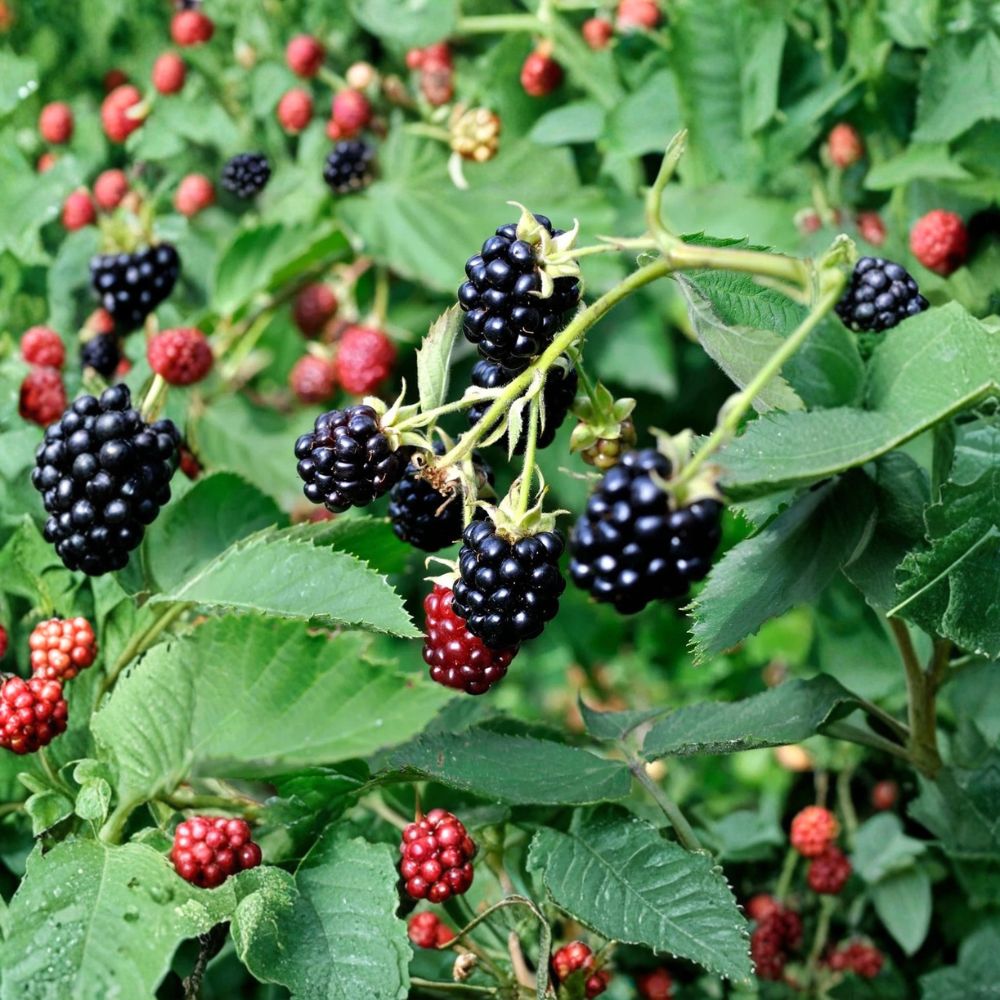
Chester Thornless Blackberry Plants – Set of 2 Live Starter Plugs | Semi-Erect Sweet Berry Bush | High Yield Fruit Plant for Garden
Chester Thornless Blackberry Plants – Set of 2 Live Starter Plugs | Semi-Erect Sweet Berry Bush | High Yield Fruit Plant for Garden
Couldn't load pickup availability
Start growing your own berries with this set of 2 live Chester Thornless Blackberry starter plants, shipped as young rooted plugs ready for planting. The Chester variety is one of the most dependable blackberry plants, known for its firm, sweet fruit and strong late-season harvests.
This thornless blackberry produces large, flavorful berries ideal for fresh eating, baking, jams, pies, and freezing. Its semi-erect canes grow vigorously and produce heavy yields, making it a favorite for both backyard gardeners and small orchards.
Chester blackberry plants thrive in sunny locations and perform best with simple trellis support, helping improve airflow and making harvesting easier. Once established, these plants provide consistent harvests of delicious berries each season.
You will receive plants similar in size and health to those shown in listing photos (images may show mature plants for reference).
You will receive:
✔️ 2 live Chester thornless blackberry plants
✔️ Young starter plug plants
✔️ Healthy rooted plants ready to plant
✔️ Productive berry variety for home gardens
✔️ Carefully packaged for safe delivery
🌼 Growing Information
Common Name: Chester Thornless Blackberry
Botanical Name: Rubus ‘Chester’
Plant Type: Deciduous fruiting bramble
Growth Stage: Starter plug plants
Sun Requirements: Full sun (6–8 hours daily preferred)
Soil: Fertile, well-draining soil rich in organic matter
Watering: Moderate; keep soil evenly moist during fruit development
Mature Height: 5–8 feet with semi-erect canes
Growth Rate: Fast growing
USDA Zones: 5–8
Pollination: Self-pollinating
Container Friendly: Yes, with large containers and trellis support
💡 Care Tip:
Provide a trellis or support system to guide the semi-erect canes and improve airflow. After harvesting, prune old fruiting canes to encourage strong new growth for the next season.
Share