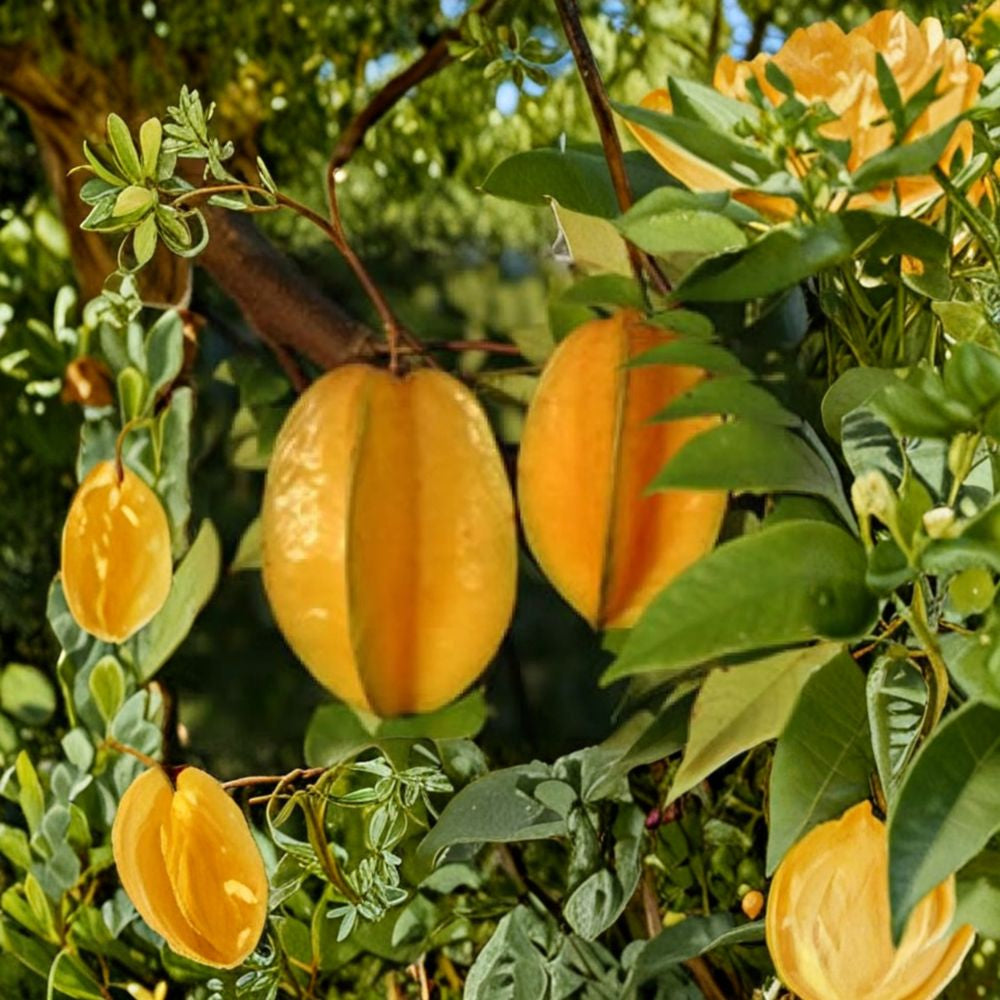
Carambola – Star Fruit – Averrhoa carambola Airlayered Tree | 4 Feet Tall | Ships in 3 Gallon Pot Sweet Citrus Flavor | Prolific Producer | Tropical Fruit Favorite
Carambola – Star Fruit – Averrhoa carambola Airlayered Tree | 4 Feet Tall | Ships in 3 Gallon Pot Sweet Citrus Flavor | Prolific Producer | Tropical Fruit Favorite
Couldn't load pickup availability
Grow your own refreshing tropical fruit with this Carambola (Star Fruit) tree, approximately 4 feet tall, airlayered, and shipped in a 3-gallon nursery pot. Airlayered trees are propagated from mature wood, helping ensure true-to-type fruit and earlier production compared to seedlings.
Carambola trees are small, symmetrical, and highly productive. The glossy foliage and abundant fruit make them both ornamental and functional in the landscape. The fruit has a sweet, citrus-like flavor that is delicious and refreshing.
Star fruit is commonly enjoyed fresh, sliced into salads, used as a decorative garnish, or added to drinks and desserts. Its distinctive star-shaped cross section makes it especially attractive for presentation.
You will receive a tree similar in size and health to the one shown in the listing photos.
You will receive:
✔️ 1 live Carambola (Star Fruit) tree
✔️ Height: approximately 4 feet
✔️ Airlayered for true-to-type fruit
✔️ Shipped in 3 gallon nursery pot
✔️ Healthy, established root system
✔️ Secure packaging for safe arrival
🌼 Growing Information
Common Name: Star Fruit, Carambola
Botanical Name: Averrhoa carambola
Plant Type: Tropical evergreen fruit tree
Growth Stage: Airlayered young tree
Sun Requirements: Full sun (6–8+ hours daily preferred)
Soil: Well-draining soil
Watering: Moderate; consistent moisture preferred
Mature Height: 15–25 feet (can be pruned smaller)
Growth Rate: Moderate
Harvest Season: Multiple crops per year in warm climates
Pollination: Self-fruitful
USDA Zones: 9–11
Container Friendly: Yes while young; transplant recommended
💡 Care Tip: Plant in a warm, sunny location protected from frost. Regular watering and balanced fertilization encourage heavy fruit production. Light pruning maintains shape and size.
Share