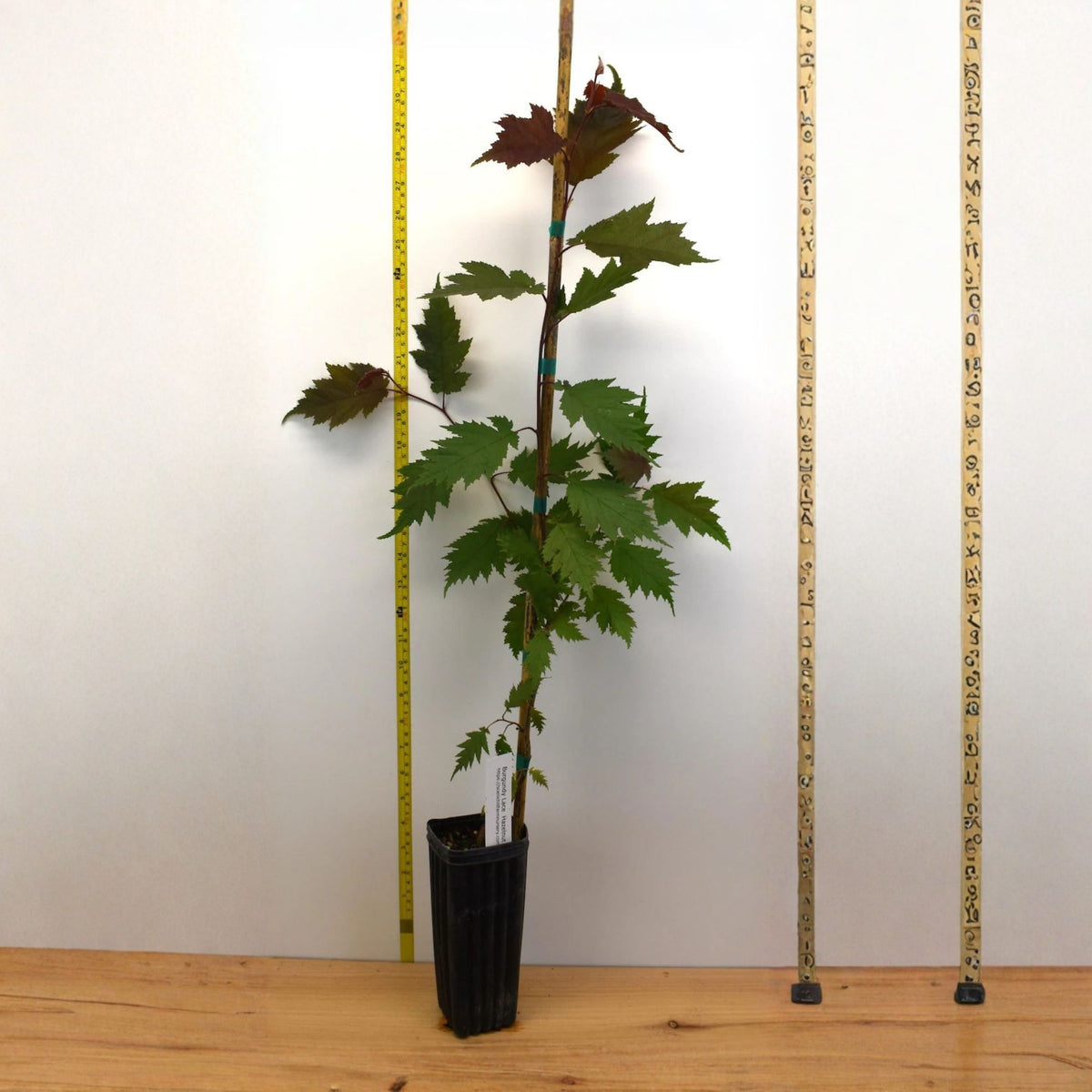
Burgundy Lace Hazelnut Live Tree, Corylus avellana, Wine Red Lacy Foliage, Ornamental Hazelnut Shrub, Edible Nut Tree
Burgundy Lace Hazelnut Live Tree, Corylus avellana, Wine Red Lacy Foliage, Ornamental Hazelnut Shrub, Edible Nut Tree
Couldn't load pickup availability
Burgundy Lace Hazelnut Live Plant – Wine-Red Lacy Foliage
Add dramatic color and graceful texture to your landscape with Burgundy Lace Hazelnut (Corylus avellana 'Burgundy Lace'). Developed by Oregon State University, this distinctive ornamental hazelnut is prized for its deeply dissected, wine-red foliage and strong resistance to Eastern Filbert Blight.
Plant Highlights
-
Botanical name: Corylus avellana 'Burgundy Lace'
-
Foliage: Deep wine-red, finely cut leaves
-
Hardiness: USDA Zones 4–8
-
Mature height: Approximately 16–25 feet
-
Mature spread: Approximately 15–20 feet
-
Growth rate: Medium
-
Light: Full sun to partial shade
-
Special features: Ornamental foliage, dark red late-winter catkins, edible nuts, and high resistance to Eastern Filbert Blight
Foliage and Seasonal Interest
The deeply dissected, wine-red leaves create an elegant, lace-like appearance. Foliage color is generally most intense in full sun and may transition toward bronze-green as summer progresses.
In late winter, the tree displays showy, dark red male catkins, adding seasonal interest before spring foliage emerges.
Growing Conditions
Burgundy Lace Hazelnut adapts to a range of soil types, including clay, and tolerates various soil pH levels. For best growth:
-
Plant in full sun to partial shade.
-
Provide average to moist, well-draining soil.
-
Avoid allowing the soil to dry out completely.
-
Protect young plants from deer and other wildlife with tree guards or an appropriate repellent.
Mature Size and Maintenance
This moderately vigorous hazelnut develops a loose, upright-spreading canopy, typically reaching 16–25 feet tall and 15–20 feet wide.
Like other hazelnuts, it produces basal suckers. Remove unwanted suckers periodically to maintain a clean single-trunk or multi-trunk tree form. Pruning can be done throughout the year.
Edible Nuts and Pollination
Burgundy Lace Hazelnut produces edible nuts, although they are generally smaller and less abundant than those of commercial hazelnut varieties.
For better nut production, plant another compatible hazelnut cultivar nearby. Burgundy Lace produces little viable pollen of its own, so a compatible pollinizer is important for achieving good yields.
Nuts typically mature in fall, around August through October. Watch for husks turning tan and splitting open, and harvest promptly to reduce losses to wildlife.
Wildlife and Pollinator Value
Hazelnut plants provide valuable seasonal food and habitat. Their early-season pollen is a food source for bees, while the plants also support numerous moth and butterfly species. The nuts provide food for wildlife.
Seasonal Shipping
Plants ship dormant without leaves during fall and winter. During spring and summer, plants generally ship with leaves.
All plants are inspected for quality before shipment. If your plant arrives damaged, please contact us promptly and include photos of the package and plant so we can help resolve the issue.
Shipping Information
Free shipping is available to most locations. Larger boxes and shipments to Alaska, Hawaii, APO addresses, U.S. territories, and locations considered remote may require an additional freight surcharge.
Please note: Plant appearance and foliage depend on the season. A dormant plant shipped during fall or winter may arrive without leaves.
Share