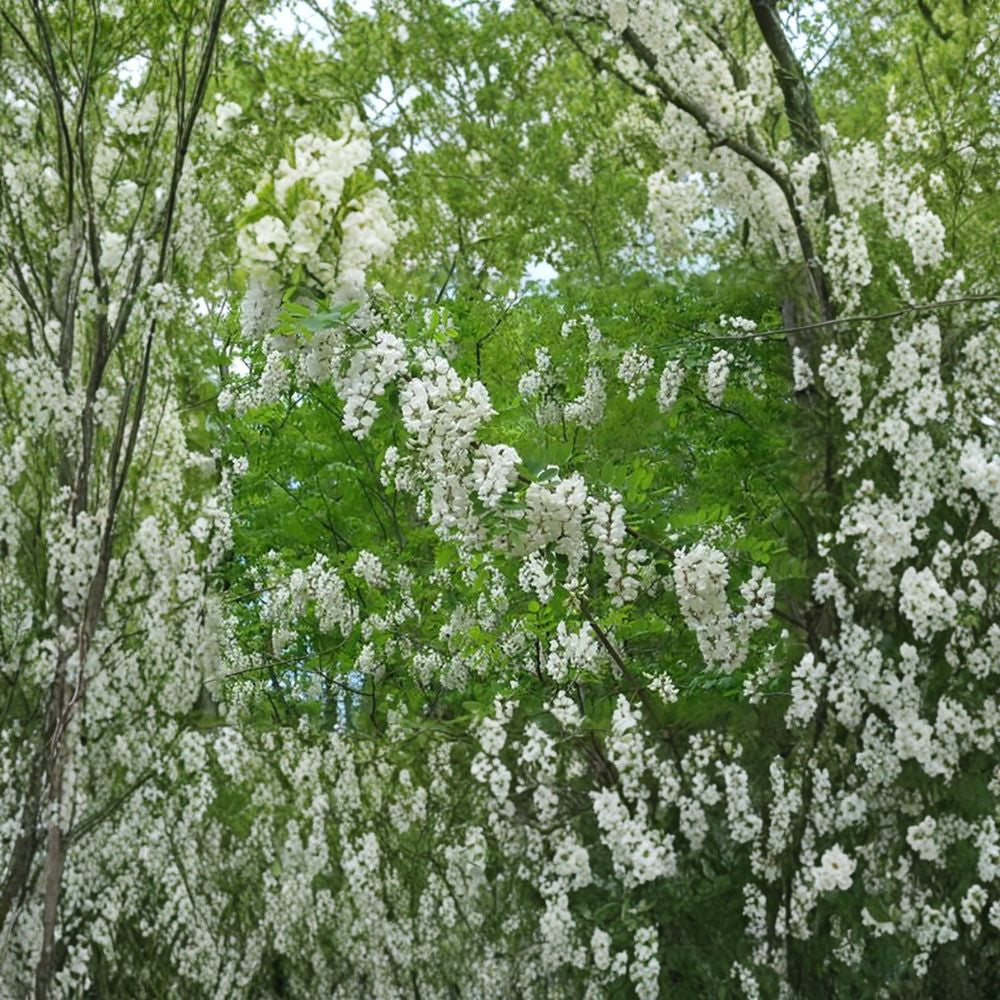
Black Locust – Robinia pseudoacacia 400 Seeds | Fast Growing Hardy Shade Tree Fragrant White Blooms | Nitrogen Fixing | Drought & Cold Tolerant
Black Locust – Robinia pseudoacacia 400 Seeds | Fast Growing Hardy Shade Tree Fragrant White Blooms | Nitrogen Fixing | Drought & Cold Tolerant
Couldn't load pickup availability
Establish a strong, adaptable shade tree with this pack of 400 Black Locust seeds. Robinia pseudoacacia is known for its rapid growth, fragrant spring blooms, and ability to thrive in tough conditions where many other trees struggle.
In late spring, this tree produces abundant 4–8 inch long clusters of intensely fragrant, white, wisteria-like flowers that hang in graceful racemes. These blooms attract bees and pollinators, producing highly sought-after honey with a delicate flavor. Smooth, flat, purple-brown seed pods follow after flowering.
Black Locust forms an open canopy that provides beautiful dappled shade. It tolerates drought, cold, heat, poor soils, and urban environments with ease. As a nitrogen-fixing tree, it improves soil fertility over time, making it ideal for windbreaks, timber plantings, land restoration, or difficult sites.
You will receive:
✔️ 400 Black Locust seeds
✔️ Botanical variety: Robinia pseudoacacia
✔️ Fresh, untreated seeds
✔️ Labeled packaging with sowing instructions
✔️ Secure packaging for safe delivery
🌼 Growing Information
Common Name: Black Locust, False Acacia
Botanical Name: Robinia pseudoacacia
Plant Type: Deciduous fragrant flowering tree
Growth Stage: Seed
Sun Requirements: Full sun
Soil: Highly adaptable; tolerates poor, sandy, and dry soils
Watering: Dry to medium
Mature Height: 30–50 feet
Spread: 20–35 feet
Growth Rate: Fast
USDA Zones: 3–8
Drought Tolerance: High
Maintenance: Medium
Special Feature: Nitrogen-fixing
💡 Care Tip: Pour boiling water over seeds and soak for 24 hours before planting. Repeat the process for seeds that do not swell. Sow 1/4 inch deep in well-drained soil. Avoid pruning in spring, as the tree may bleed sap.
Share