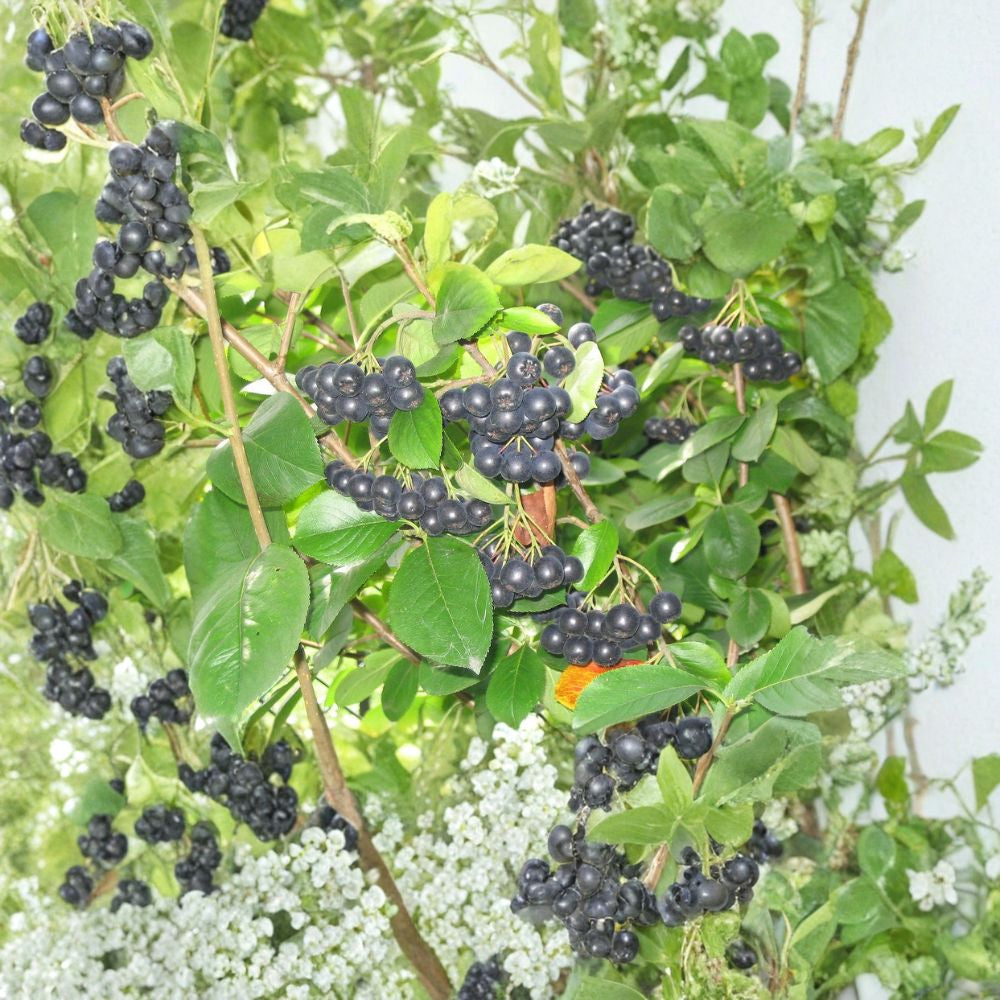
Black Chokeberry – Aronia melanocarpa 50 Seeds | Hardy Edible Shrub Cold Hardy Native Shrub | Antioxidant-Rich Berries | Brilliant Fall Color
Black Chokeberry – Aronia melanocarpa 50 Seeds | Hardy Edible Shrub Cold Hardy Native Shrub | Antioxidant-Rich Berries | Brilliant Fall Color
Couldn't load pickup availability
Grow a tough, beautiful, and highly productive native shrub with these Black Chokeberry (Aronia melanocarpa) seeds. This adaptable deciduous shrub is prized for its showy spring flowers, glossy summer foliage, vibrant fall color, and nutrient-rich edible berries.
In spring, clusters of white five-petaled flowers cover the plant. By late summer to early fall, glossy black berries develop, rich in vitamin C and antioxidants. While very tart fresh, the fruits are excellent for jams, jellies, wine, syrup, juice, tea, and other preserves. Birds and wildlife also love the berries, making this an excellent choice for habitat gardens.
Black Chokeberry is extremely hardy and tolerant of cold, heat, drought, salt, wind, and even boggy soils. It spreads naturally by root suckers, making it ideal for hedges, windbreaks, erosion control, native plant gardens, and naturalized areas.
You will receive clean, labeled seeds ready for stratification and planting.
You will receive:
✔️ 50 Black Chokeberry seeds
✔️ Clearly labeled seed packet
✔️ Sowing instructions
✔️ Non-GMO, untreated seeds
🌼 Growing Information
Common Name: Black Chokeberry
Botanical Name: Aronia melanocarpa
Plant Type: Deciduous fruiting shrub
Growth Stage: Seed
Sun Requirements: Full sun to part shade
Soil: Average, well-drained soil; tolerates boggy conditions
Watering: Medium; drought tolerant once established
Mature Height: 3–6 feet
Spread: 3–6 feet
Growth Rate: Slow to moderate
USDA Zones: 3–9
Native Range: Eastern United States & Southern Canada
💡 Care Tip: Soak seeds in water for 24 hours before cold stratification. Cold stratify for 90–120 days at approximately 40°F in a moist medium. Sow 1/16 inch deep and keep soil consistently moist during germination. Remove root suckers if you want to control spreading.
Share