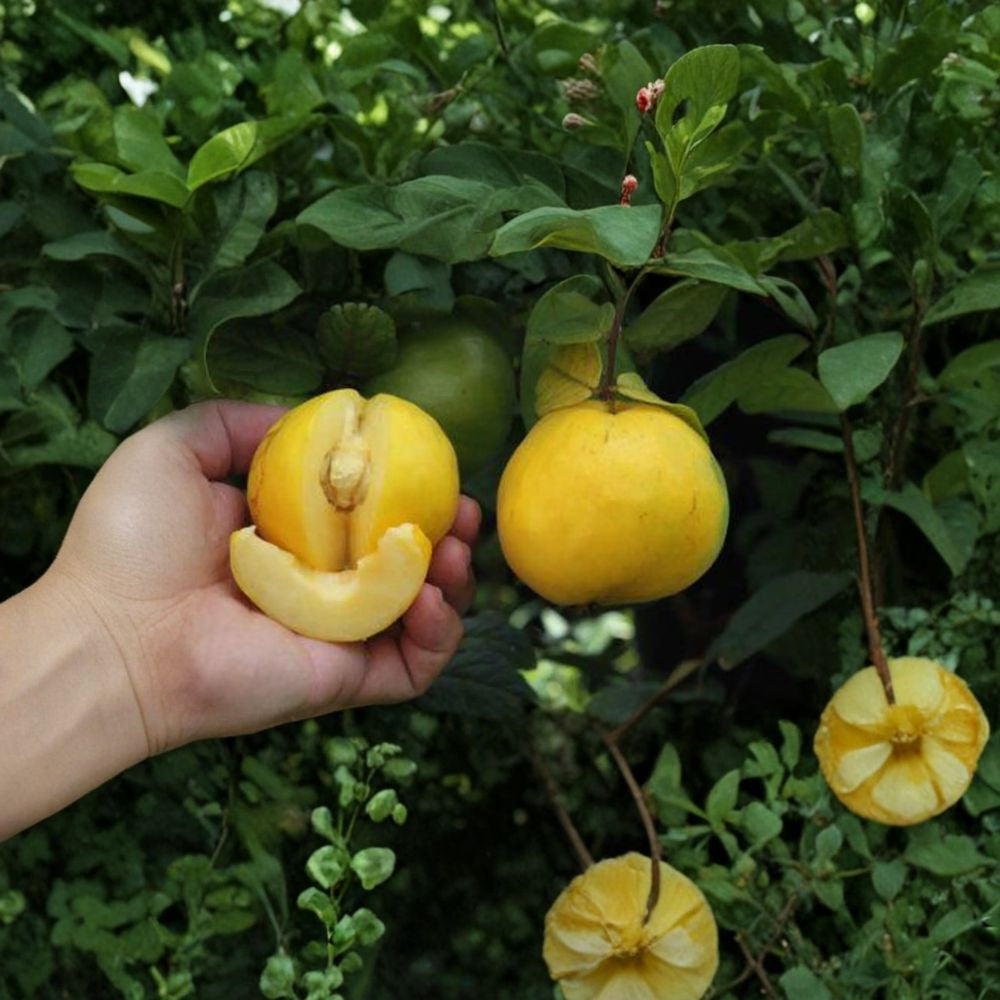
Araza – Eugenia stipitata Live Fruit Tree | 2 Feet Tall | Includes 3 Gallon Nursery Pot Rare Amazon Fruit | Fast Fruiting | Tropical Cocktail Favorite
Araza – Eugenia stipitata Live Fruit Tree | 2 Feet Tall | Includes 3 Gallon Nursery Pot Rare Amazon Fruit | Fast Fruiting | Tropical Cocktail Favorite
Couldn't load pickup availability
Discover one of the Amazon’s hidden gems with Araza (Eugenia stipitata), an extremely rare New World fruit native to Brazil. This 2 foot tall live tree ships in a 3 gallon nursery pot and is well-rooted and ready to grow in warm climates.
Araza is a small, multi-stemmed tree that produces numerous round fruits resembling tennis balls hanging from graceful, weeping branches. The fruit has a bright, pleasantly aromatic flavor and a tart profile that makes it incredibly versatile. It is commonly used in tropical drinks, cocktails, juices, popsicles, and ice cream.
This bushy tree can be maintained at 6 feet or less with pruning or trained into a standard single-trunk form. Even better, Araza is known for its relatively fast fruiting time, often producing within 2–3 years under ideal conditions.
You will receive a plant similar in size and health to the one shown in the listing photos.
You will receive:
✔️ 1 live Araza tree
✔️ Height: approximately 2 feet tall
✔️ Shipped in 3 gallon nursery pot
✔️ Healthy, established root system
✔️ Secure packaging for safe arrival
🌼 Growing Information
Common Name: Araza
Botanical Name: Eugenia stipitata
Plant Type: Tropical fruiting shrub/tree
Growth Stage: Young established tree
Sun Requirements: Full sun to partial shade
Soil: Rich, well-draining soil
Watering: Moderate to high; prefers consistent moisture
Mature Height: 6–15 feet (smaller with pruning)
Growth Rate: Moderate to fast in warm climates
USDA Zones: 9–11
Container Friendly: Yes (large container recommended when young)
💡 Care Tip: Protect from frost and provide regular watering during active growth. Prune to shape as a compact bush or train into a single trunk form. Feed during the growing season to encourage faster establishment and fruiting.
Share