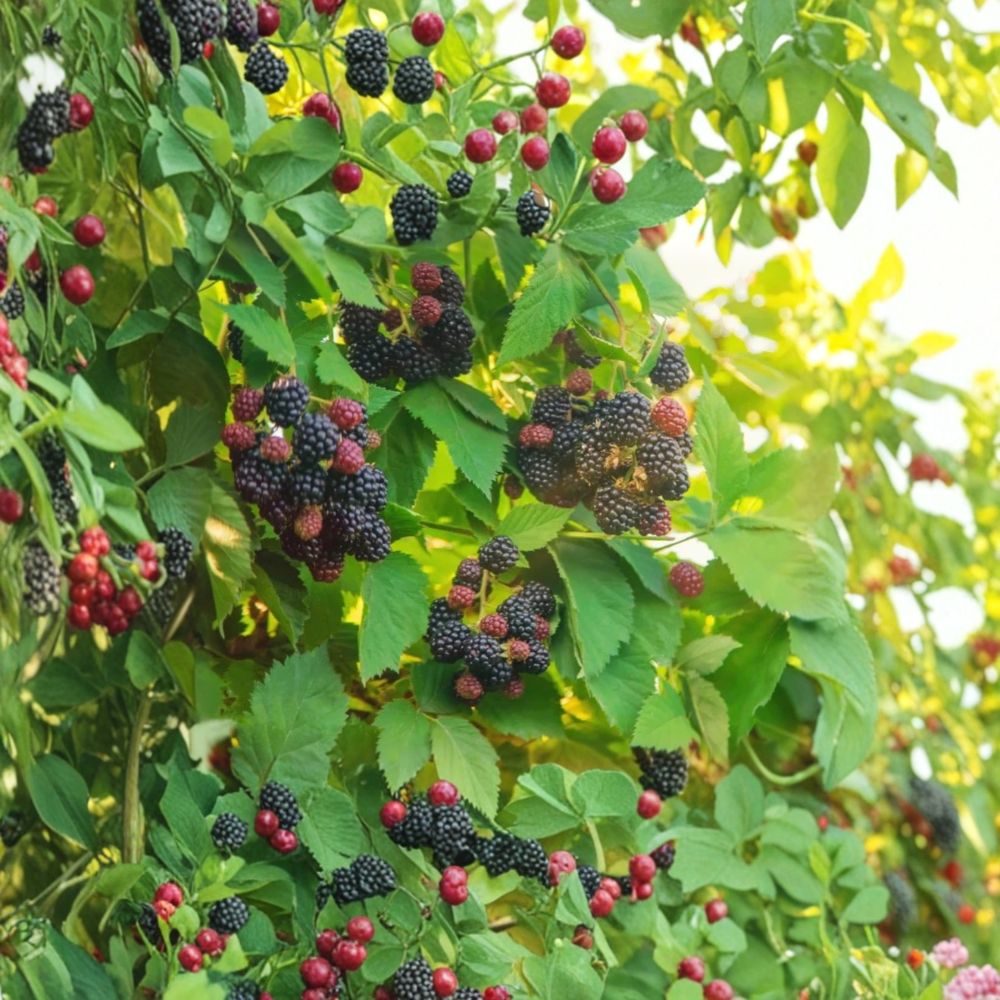
Arapaho Thornless Blackberry – Rubus fruticosus ‘Arapaho’ Live Plants | 4–6 Inches Tall | Set of 4 Soil-Wrapped Roots | Sweet Berry Bush | Garden Ready
Arapaho Thornless Blackberry – Rubus fruticosus ‘Arapaho’ Live Plants | 4–6 Inches Tall | Set of 4 Soil-Wrapped Roots | Sweet Berry Bush | Garden Ready
Couldn't load pickup availability
Grow delicious homegrown berries with this set of 4 Arapaho Thornless Blackberry plants, a productive and easy-care variety known for its sweet fruit, thornless canes, and upright growth habit. These starter plants arrive approximately 4–6 inches tall with soil-wrapped roots (no pot) and are ready to transplant into your garden or container.
The Arapaho blackberry produces large, sweet berries during summer, perfect for fresh eating, baking, desserts, smoothies, jams, and preserves. Its upright and self-supporting growth means it often does not require heavy trellising, making it an excellent option for backyard gardens, raised beds, and edible landscapes.
This variety is low maintenance and drought tolerant once established, while also supporting pollinators with its seasonal blooms. With proper care, these plants will develop into vigorous berry bushes that produce abundant harvests each year.
You will receive plants similar in size and condition to those shown in the listing photos.
You will receive:
✔️ 4 live Arapaho thornless blackberry plants
✔️ Height: approximately 4–6 inches
✔️ Rooted plants with soil-wrapped roots
✔️ No pot included
✔️ Secure packaging for safe arrival
🌼 Growing Information
Common Name: Arapaho Thornless Blackberry
Botanical Name: Rubus fruticosus ‘Arapaho’
Plant Type: Perennial fruiting shrub
Growth Stage: Starter plants
Sun Requirements: Full sun to partial shade (6+ hours preferred)
Soil: Well-draining fertile soil, slightly acidic preferred
Watering: Moderate; drought tolerant once established
Mature Height: 4–6 feet tall
Spread: Approximately 4 feet
Growth Rate: Fast growing
USDA Zones: 4–9
Container Friendly: Yes
💡 Care Tip: Space plants 3–5 feet apart for good airflow and healthy growth. After fruiting, prune older canes to encourage vigorous new growth and better berry production the following season.
Share