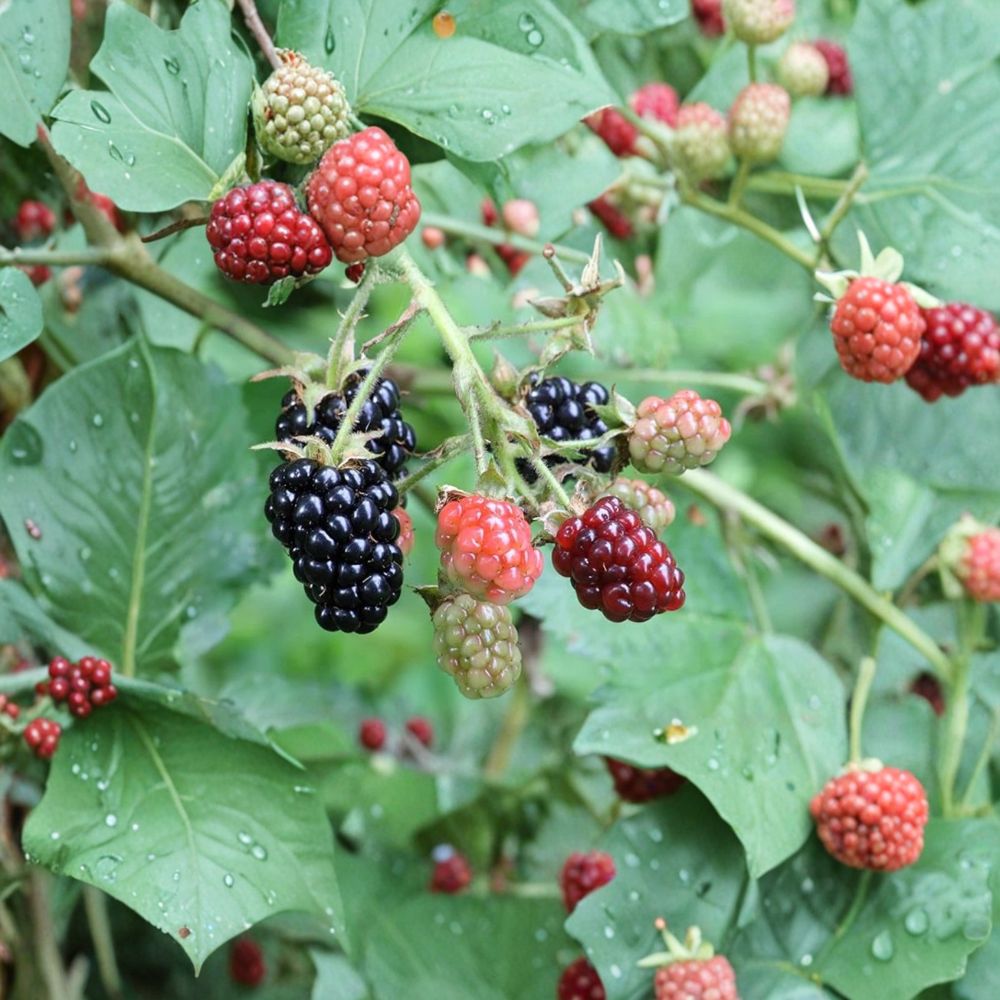
Arapaho Thornless Blackberry Plant – 2 Year Live Potted Berry Bush | Early Ripening Sweet Fruit | Backyard Garden Friendly
Arapaho Thornless Blackberry Plant – 2 Year Live Potted Berry Bush | Early Ripening Sweet Fruit | Backyard Garden Friendly
Couldn't load pickup availability
Grow delicious early-season berries with this live Arapaho Thornless Blackberry plant, a 2-year-old established plant known for its strong growth and excellent fruit quality. This thornless variety is a favorite among home gardeners for its easy maintenance, early harvest, and high yields.
The Arapaho blackberry produces large, sweet berries with very small seeds, making them perfect for fresh eating, jams, syrups, and desserts. With its upright and self-supporting growth habit, this variety often grows well without a trellis and can form productive berry hedgerows over time.
Arapaho plants are known for their cold hardiness, disease resistance, and reliable productivity. The berries also store well after harvest, making them a great choice for backyard gardens, berry rows, and edible landscapes.
You will receive:
✔️ 1 live Arapaho thornless blackberry plant
✔️ 2-year-old established plant
✔️ Shipped in nursery pot (pot may be removed for shipping)
✔️ Healthy well-rooted berry plant
✔️ Carefully packaged for safe delivery
🌼 Growing Information
Common Name: Arapaho Thornless Blackberry
Botanical Name: Rubus fruticosus ‘Arapaho’
Plant Type: Perennial fruiting bramble
Growth Stage: Established 2-year plant
Sun Requirements: Full sun (6–8 hours daily preferred)
Soil: Fertile, well-draining soil
Watering: Moderate; water regularly during fruiting
Spacing: 3–5 feet between plants for airflow
Mature Height: 4–6 feet
Growth Rate: Fast growing once established
Harvest Season: Early summer
USDA Zones: 5–9
Container Friendly: Yes, with large containers
💡 Care Tip:
Plant in a sunny location with good airflow and water regularly during fruit development. Pruning old fruiting canes after harvest helps promote stronger new growth and better yields next season.
Share