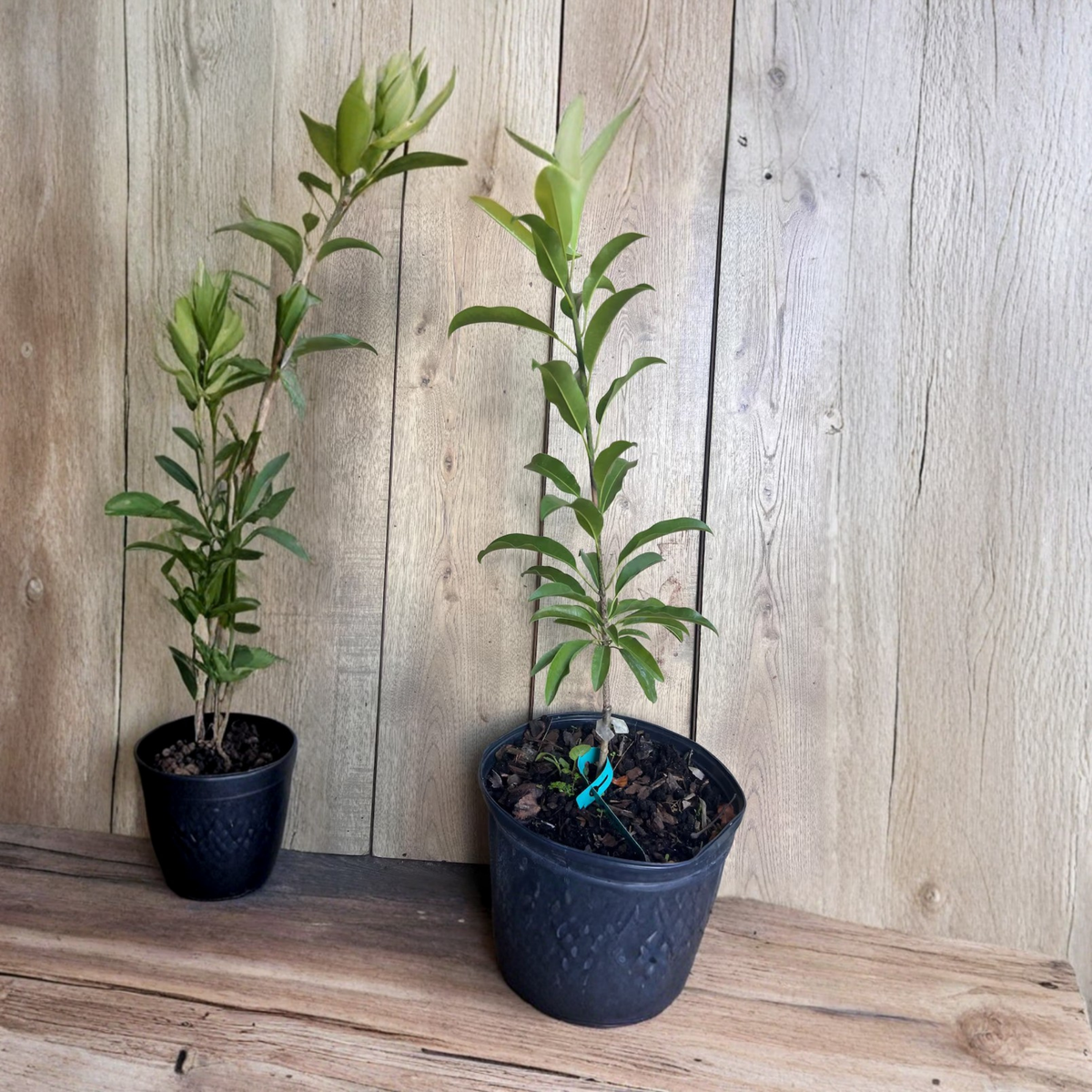
Alano Sapodilla Live Tree, Brown Sugar Sapodilla, Air Layered Fruit Tree, Sawo Cheeku Lamut, 3 Gallon Pot
Alano Sapodilla Live Tree, Brown Sugar Sapodilla, Air Layered Fruit Tree, Sawo Cheeku Lamut, 3 Gallon Pot
Couldn't load pickup availability
Grow a taste of the tropics with the Alano Brown Sugar Sapodilla tree! Sapodilla (Manilkara zapota) is a tropical fruit tree treasured for its sweet, aromatic fruit and attractive evergreen foliage. The Alano Brown Sugar selection is described by growers for its rich sweetness and flavor often compared to brown sugar, making it an appealing choice for home orchard enthusiasts and tropical fruit collectors.
Also known as Sawo, Cheeku, Chikoo, and Lamut in different regions, sapodilla is a wonderful addition to a suitable warm-climate garden. This air-layered tree is propagated vegetatively rather than grown from seed, helping preserve the characteristics of the parent plant when correctly identified.
🌳 Plant Details
-
Variety: Alano Brown Sugar Sapodilla
-
Botanical name: Manilkara zapota
-
Common names: Sapodilla, Sawo, Cheeku, Chikoo, Lamut
-
Propagation: Air-layered
-
Pot size: 3-gallon nursery pot
-
Plant type: Tropical evergreen fruit tree
-
Light: Full sun, ideally 6–8 hours daily
-
Soil: Well-draining soil enriched with organic matter
-
Best for: Tropical home orchards, fruit tree collections, and warm-climate gardens
🍈 About Alano Brown Sugar Sapodilla
Sapodilla fruit typically has brown skin and sweet, soft flesh when ripe. The flavor is often described as caramel-like or brown-sugar sweet, with some fruit offering hints of pear. Fruit size, shape, texture, and flavor can vary with growing conditions and maturity.
The fruit is enjoyed fresh and can also be used in smoothies, desserts, and other recipes. Allow fruit to ripen properly before eating; unripe sapodilla is firm and contains sticky latex.
☀️ Sunlight
Choose a sunny location with around 6–8 hours of direct sunlight daily. If moving the tree from a sheltered nursery environment into stronger sun, acclimate it gradually to reduce the chance of leaf scorch.
🪴 Soil
Sapodilla prefers well-draining soil with organic matter. It can tolerate a range of soil conditions, but good drainage is important for healthy roots. For container growing, use a suitable, well-aerated potting mix and a container with drainage holes.
💧 Watering
Water regularly while the tree establishes, adjusting frequency to the weather and soil conditions. Once established, deep watering with time for the soil to drain is generally preferable to keeping the root zone constantly wet. Avoid waterlogged soil, which can stress the roots.
🌱 Fertilizing
Use a balanced fertilizer appropriate for tropical fruit trees and follow the product label for application rates. Fertilizer needs depend on tree age, soil fertility, and growth. Avoid overfertilizing, especially when the tree is newly transplanted or stressed.
✂️ Pruning and Mulching
Remove dead, damaged, or diseased branches and prune lightly to maintain a manageable canopy. Avoid unnecessary heavy pruning. A layer of organic mulch can help conserve soil moisture and suppress weeds; keep mulch away from direct contact with the trunk.
🌡️ Climate and Growing Conditions
Sapodilla is a tropical tree that grows best in warm, frost-free conditions. Protect young trees from cold weather and strong winds. If you live in a cooler climate, container growing may allow you to move the tree to a sheltered location when temperatures drop, although a mature tree may eventually require substantial space.
📦 What You’ll Receive
You will receive one air-layered Alano Sapodilla tree in a 3-gallon pot, similar to the listing photos. Because each plant is a living specimen, height, branching, leaf count, and overall shape may vary.
🌴 Perfect For
-
Tropical fruit tree collectors
-
Home orchard enthusiasts
-
Sapodilla and Sawo lovers
-
Gardeners interested in air-layered fruit trees
-
Warm-climate edible landscapes
Please note: This listing is for one live tree, not fresh fruit or seeds. Air-layered trees are vegetatively propagated, but flowering, fruiting, harvest timing, and exact fruit characteristics are not guaranteed and depend on plant maturity, climate, care, and cultivar identity.
Share