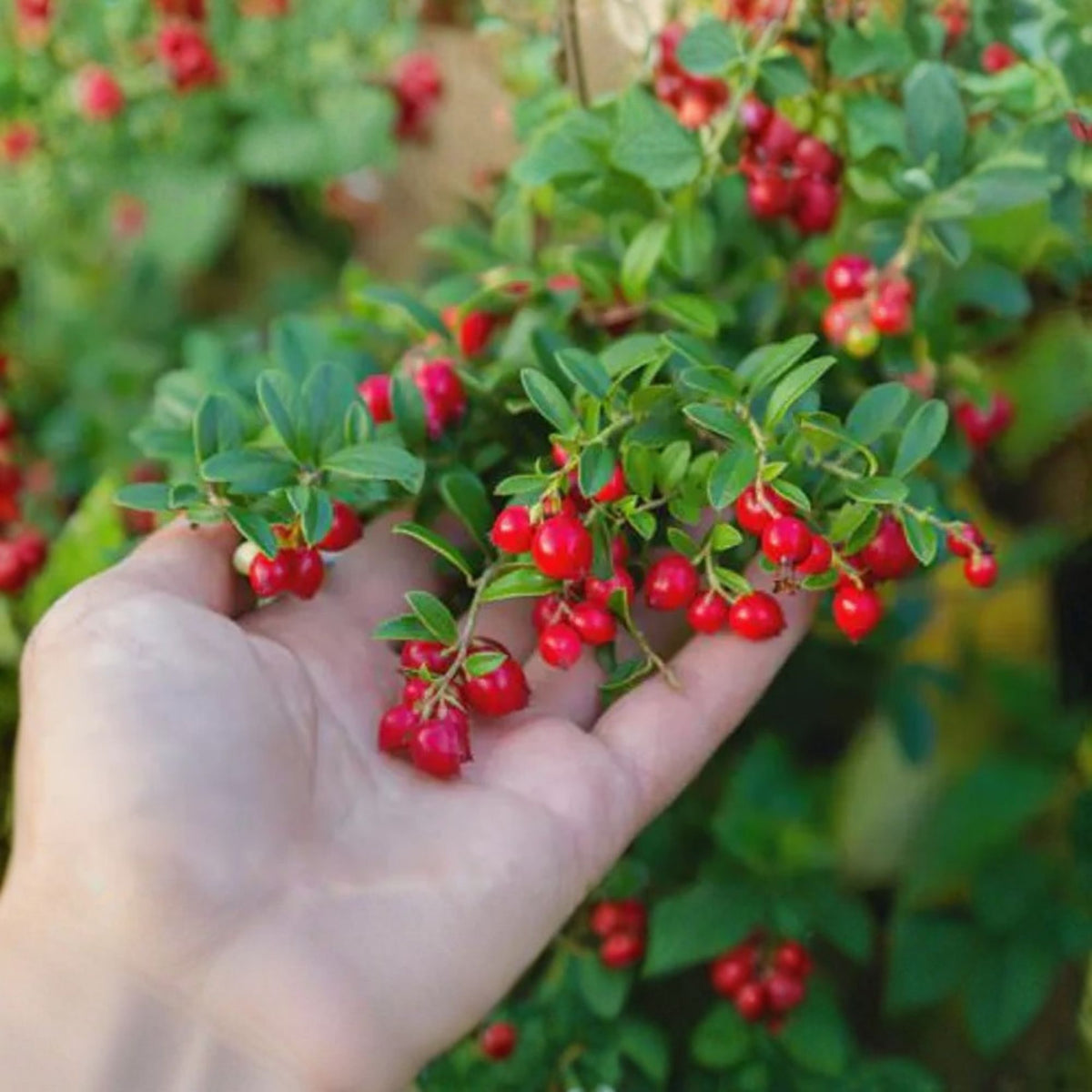
32 Two-Year-Old Koralle Lingonberry Plants, Vaccinium vitis-idaea Live Evergreen Berry Shrubs, Edible Red Lingonberries, Low Growing Groundcover, Container or Landscape Plants
32 Two-Year-Old Koralle Lingonberry Plants, Vaccinium vitis-idaea Live Evergreen Berry Shrubs, Edible Red Lingonberries, Low Growing Groundcover, Container or Landscape Plants
Couldn't load pickup availability
32 Two-Year-Old Koralle Lingonberry Plants – Live Evergreen Berry Shrubs
Add year-round greenery, spring flowers, and delicious tart red berries to your garden with 32 live, two-year-old Koralle Lingonberry plants (Vaccinium vitis-idaea 'Koralle').
Koralle is a compact, low-maintenance evergreen shrub valued for its glossy foliage and abundant edible berries. Its low, spreading growth makes it suitable for groundcover, landscape plantings, and containers.
Plant Features
-
Quantity: 32 live plants
-
Age: Two-year-old plants
-
Botanical name: Vaccinium vitis-idaea 'Koralle'
-
Growth habit: Compact, upright shrub that develops into a low, mat-like groundcover
-
Mature height: 6–18 inches
-
Mature spread: 1–3 feet
-
Foliage: Small, glossy, evergreen leaves
-
Flowers: Small white-to-pink, bell-shaped spring blooms
-
Fruit: Bright red, tart, edible berries
-
Hardiness: USDA Zones 3–7; Zone 8 on the West Coast
Berries and Garden Interest
Koralle is known for heavy berry production and often produces two crops per year: one in late summer and another in early fall. The bright red berries provide attractive fall and winter interest and can be used for:
-
Sauces
-
Jellies
-
Preserves
The evergreen foliage and compact growth also make Koralle a useful ornamental groundcover.
Growing Requirements
-
Light: Full sun to partial shade. Avoid locations with afternoon sun.
-
Soil: Rich, well-draining, acidic soil.
-
Soil pH: 4.0–6.0.
-
Moisture: Maintain consistent moisture, but avoid waterlogged conditions.
-
Spacing: Plant approximately 12 inches apart.
-
Mulch: Apply mulch to retain moisture and suppress weeds.
-
Fertilizer: Light spring fertilization can be beneficial.
Koralle may struggle in alkaline or heavy clay soils. Peat moss, fir or pine sawdust, and pine needles can help create more acidic growing conditions.
Pollination
Koralle is self-pollinating. Planting another lingonberry variety, such as 'Red Candy', may help increase fruit production.
Lingonberry Soil and Growing Mix
For seasonal container growing, we recommend using our Lingonberry potting soil mix.
For in-ground planting, individual soil components may be added if you cannot find suitable materials locally. The recommended sawdust application is 10% of the soil mix, plus an additional 2-inch layer as mulch to help retain moisture. As the sawdust decomposes, it helps lower soil pH.
Our professional-style Lingonberry potting mix contains:
-
30% – 3/8-inch-minus fine fir bark, unscreened
-
10% – Fir sawdust
-
15% – 3/8-inch-minus natural Cascade Mountain volcanic pumice, unscreened
-
25% – Peat moss
-
10% – Perlite
-
10% – Vermiculite
Shipping Information
Free shipping is available to most locations.
Larger boxes and shipments to Alaska, Hawaii, APO addresses, U.S. Territories, or areas considered remote may require an additional freight surcharge.
Bring Lingonberries to Your Garden
With evergreen foliage, delicate spring blooms, and bright red edible berries, Koralle is a lovely choice for acidic garden beds, low-growing landscape plantings, and seasonal containers.
Share