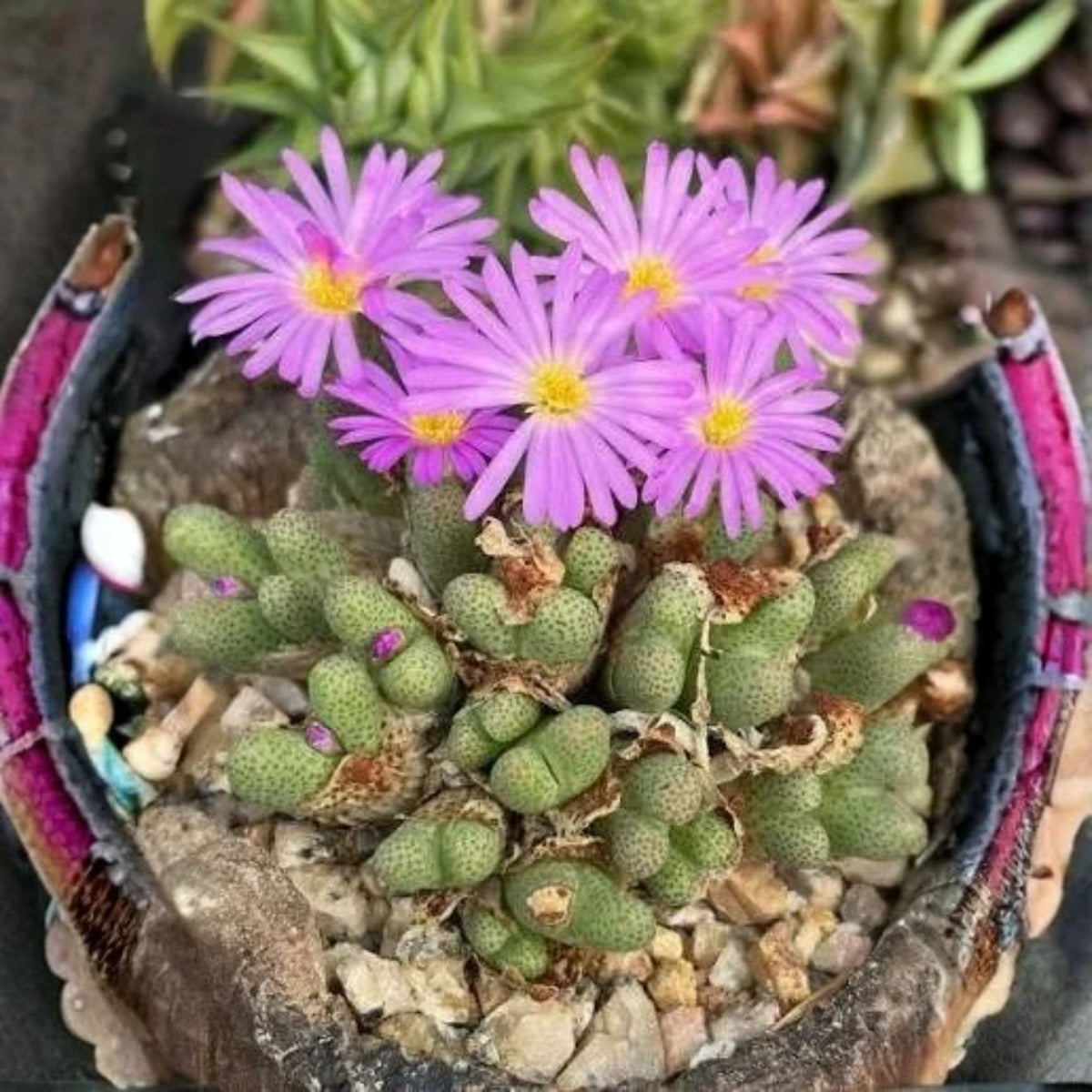
15 Conophytum karamoepense Seeds, Rare Living Stones Succulent, South African Mesemb, Exotic Collector Plant
15 Conophytum karamoepense Seeds, Rare Living Stones Succulent, South African Mesemb, Exotic Collector Plant
Couldn't load pickup availability
Discover an unusual miniature succulent with Conophytum karamoepense, a rare living-stone plant sought after by mesemb enthusiasts and succulent collectors. Its fascinating compact growth and distinctive leaf forms make it an intriguing addition to a specialized plant collection.
What You Will Receive
-
15 Conophytum karamoepense seeds
-
Seeds collected during the current season
-
Seeds only — no live plant, pot, or growing medium included
About Conophytum
Conophytum is a genus of dwarf succulent plants native to South Africa and Namibia. Commonly called living stones, button plants, or dumplings, these fascinating succulents are known for their unusual paired leaves.
The two succulent leaves are partially or completely fused, forming bodies that may be rounded, oval, tubular, or cone-shaped. Some species also have translucent windows on the leaf surface. Plants may grow as single bodies or form compact cushions with multiple stems.
Growing from Seed
For best results when starting these tiny seeds:
-
Use a fine, gritty, well-draining medium suitable for mesemb succulents.
-
Sow seeds on the surface or cover them very lightly.
-
Provide bright light and gentle warmth.
-
Keep the growing medium lightly moist during germination, avoiding waterlogging.
-
Provide good air circulation and careful moisture management as seedlings develop.
Conophytums have seasonal growth and dormancy cycles. As plants mature, adjust watering to their growth cycle rather than keeping the soil continuously moist.
A Special Find for Living-Stone Collectors
Whether you collect rare mesembs, enjoy miniature succulents, or want to grow an unusual botanical species from seed, Conophytum karamoepense is a fascinating choice.
Please note: This listing is for 15 seeds only, not a live plant. Germination and seedling development may vary depending on growing conditions.
Share